
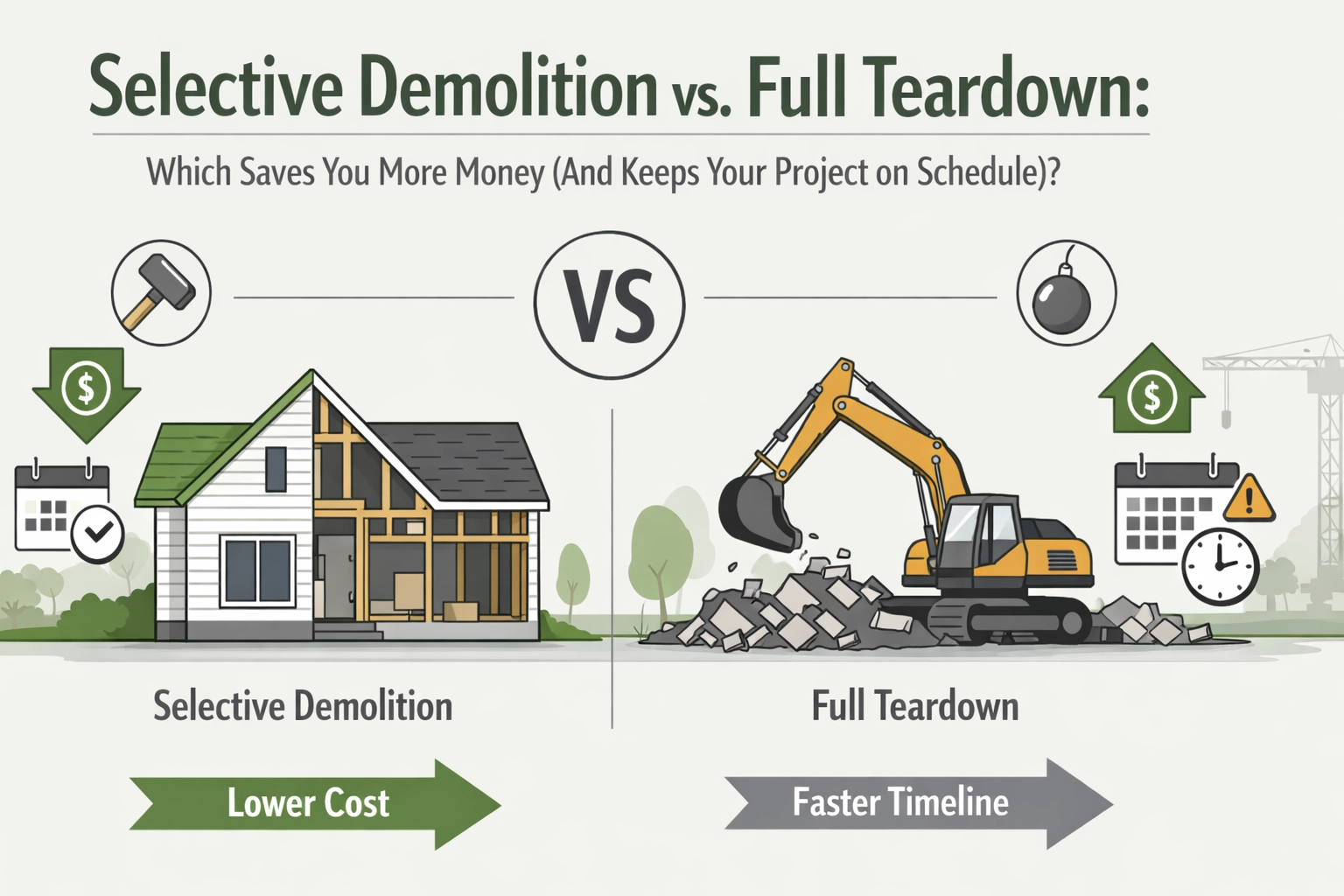
You're ready to renovate. The question is: do you tear down everything and start fresh, or do you carefully remove only what needs to go?
It's not just about swinging a sledgehammer versus using a pry bar. The approach you choose affects your budget, your timeline, and how smoothly the rest of your project flows. And if you're coordinating with other trades: plumbers, electricians, HVAC techs: your demolition strategy can either set them up for success or create chaos.
Here's the breakdown on selective demolition vs. full teardown, including when each makes sense and how the right choice keeps your project on track.
What's the Difference?
Full teardown means exactly what it sounds like: everything in that space comes out. Walls, ceilings, flooring, fixtures: all of it goes down to the studs (or sometimes beyond). You're starting with a blank slate.
Selective demolition (also called partial demolition) is more surgical. You're removing specific elements: a section of wall, a doorway, old cabinetry: while preserving the rest of the structure. It requires precision, planning, and a crew that knows what they're doing.
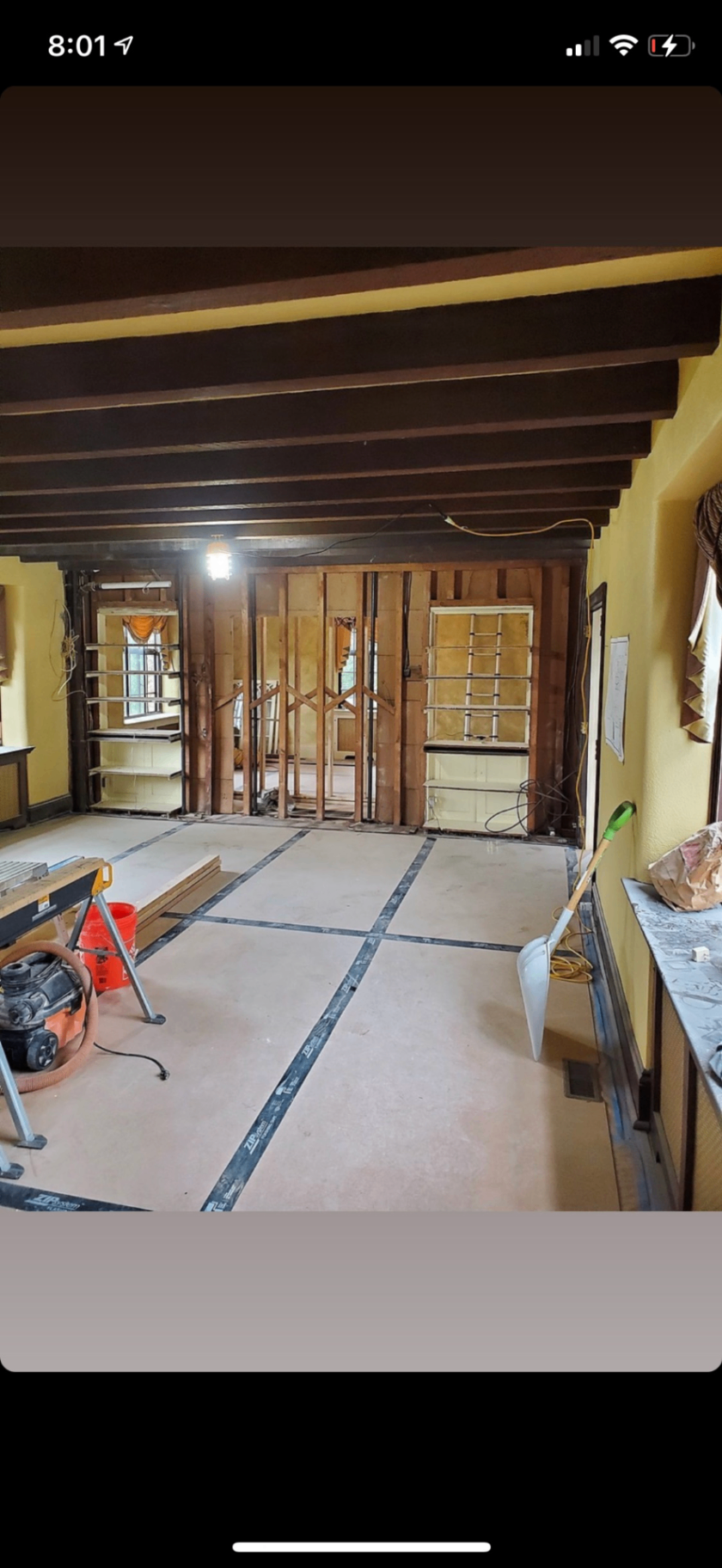
The difference isn't just about how much debris you haul away. It's about what stays, what goes, and how that decision impacts everything else.
The Cost Breakdown
Let's talk numbers.
Full demolition for a residential project typically runs $8,000 to $20,000, or about $4 to $10 per square foot. For a standard 1,500 sq. ft. home, you're looking at $14,000 to $19,000 nationally.
Selective demolition is usually more cost-effective upfront because you're doing less work. You're not hauling as much material. You're not tearing out systems that are staying. You're not rebuilding as much afterward.
But here's the catch: selective demo can get complicated. If your crew has to work around plumbing lines, electrical panels, or load-bearing walls, the labor costs climb. The work takes longer. And if something unexpected pops up: hidden damage, asbestos, outdated wiring: costs can escalate quickly.
Partial demolition (removing specific sections like a kitchen or bathroom while leaving the rest intact) falls in the middle: $2,000 to $20,000 depending on scope. This approach significantly lowers your overall project cost because you're reducing labor, disposal fees, and the amount of rebuilding required.
One more thing: selective demolition lets you salvage materials. If you're tearing out hardwood flooring, vintage fixtures, or quality cabinetry, you can sell or reuse those materials. That offsets some of your demo costs and keeps usable stuff out of the landfill.
Timeline: Fast vs. Careful
Full teardown is faster. There's no dancing around what stays or coordinating with other trades mid-demo. The crew comes in, strips everything, hauls it away, and you're ready for the next phase.
Selective demolition takes longer. It's labor-intensive. It requires careful hand work to preserve walls, floors, and systems you're keeping. You can't just rip and run: you have to measure, mark, cut, and verify before every move.
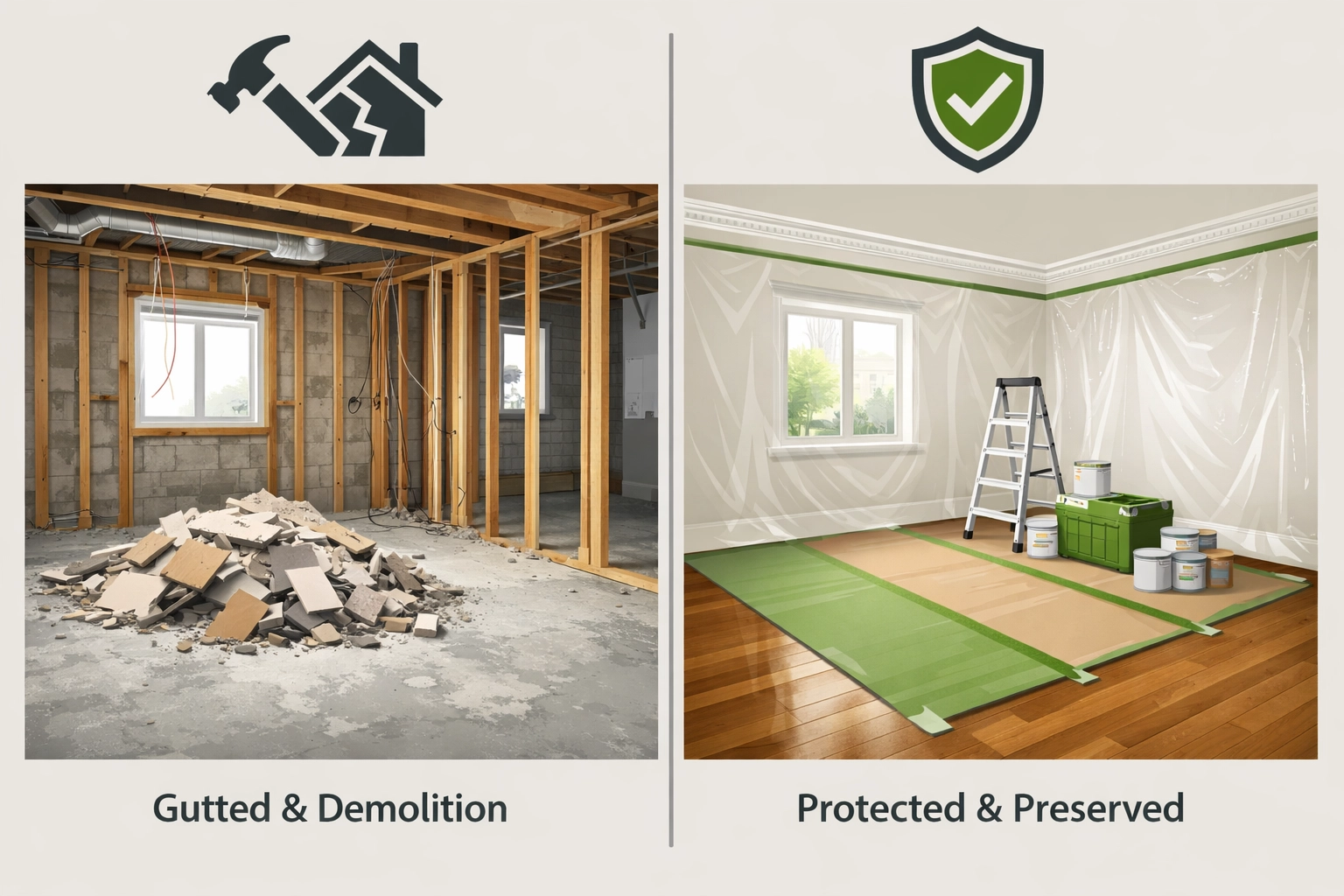
If speed is your priority and you're rebuilding from scratch anyway, full demo wins on timeline. But if you're renovating within an existing home: especially if you're living there during construction: selective demolition gives you more control over how disruptive the process is.
When to Choose Selective Demolition
Go with selective demolition if:
- You're renovating a specific room (kitchen, bathroom, master suite) while leaving the rest of your home intact
- You want to preserve architectural details, original flooring, or structural elements
- You're working within a tight budget and want to minimize rebuild costs
- You're coordinating with electricians, plumbers, or HVAC contractors who need existing systems to stay functional during demo
- You're living in the home during renovation and need to keep disruption contained
Selective demolition shines when you're integrating new work with existing structure. It's ideal for homeowners who want to modernize without losing character: or who simply can't afford (or don't need) to gut the entire space.

When to Choose Full Teardown
Go with full demolition if:
- You're doing a complete remodel and starting fresh with new everything
- The existing structure is damaged, outdated, or not worth saving
- You need to relocate plumbing, electrical, or HVAC systems
- You want a faster timeline and can handle the higher upfront cost
- You're adding square footage or changing the layout significantly
Full teardown makes sense when you're building your vision from scratch. It eliminates guesswork, gives your contractors clean access to framing and systems, and speeds up the overall project.
Multi-Trade Coordination: Why Your Demo Choice Matters
Here's something most homeowners don't think about: your demolition approach directly impacts every other contractor on the job.
If you're doing selective demolition, your electrician might need existing circuits to stay live while they're roughing in new outlets. Your plumber might need the main water line intact while they're rerouting supply lines. Your HVAC contractor might need to tie into existing ductwork before you remove surrounding walls.
This requires coordination. Not just scheduling: actual planning between trades to figure out sequencing, access, and what gets removed when.
A good demolition contractor doesn't just show up and start swinging. They partner with your other contractors to map out the safest, most efficient sequence. They know when to pause, when to isolate systems, and how to keep dust and debris away from active work zones.
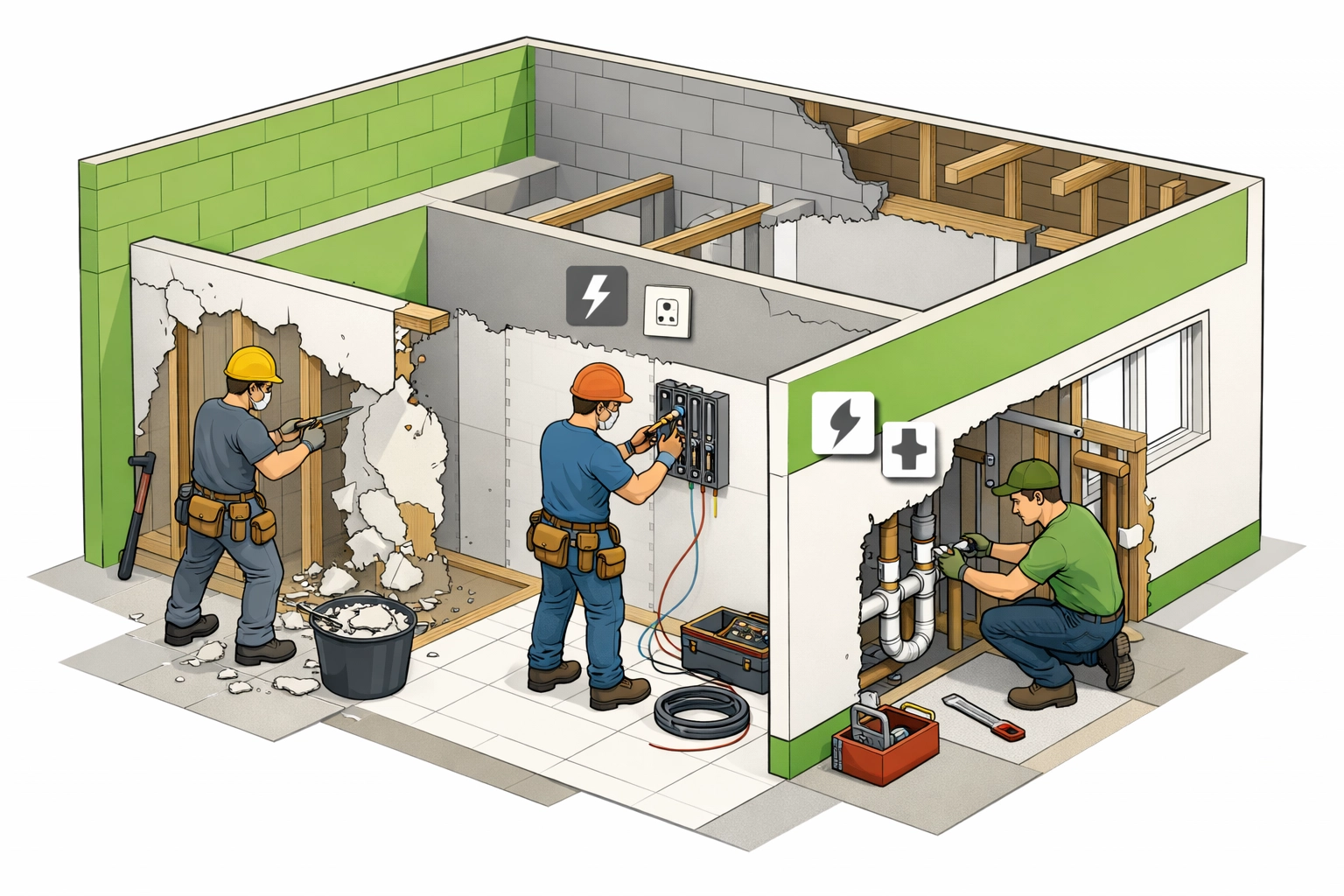
At Narcise Construction Group, we routinely work alongside electricians, plumbers, and HVAC pros during selective demolition projects. We communicate before, during, and after demo to make sure everyone has what they need. That's how you keep projects on schedule and avoid costly rework.
Project Partnership: What to Look for in a Demo Contractor
Whether you choose selective demolition or full teardown, you want a contractor who understands the bigger picture.
Look for a crew that:
- Asks about your timeline, budget, and what's staying vs. going
- Coordinates with your other trades instead of working in a silo
- Provides clear, upfront pricing with no hidden fees
- Handles permits, disposal, and site cleanup
- Protects the parts of your home that aren't being demolished
Residential demolition isn't just about tearing stuff out. It's about setting up your renovation for success. The right contractor makes the rest of your project easier. The wrong one creates headaches, delays, and surprise costs.
Making Your Decision
So which approach saves you more money? It depends.
Selective demolition is more cost-effective if you're working within an existing structure, preserving materials, and don't need to rebuild everything. It takes longer, but it gives you flexibility and keeps renovation costs down.
Full teardown costs more upfront but completes faster and gives you a clean slate. If you're doing a major remodel or new construction, the higher initial investment pays off in speed and simplicity.
Both approaches require the right crew. One that understands residential demolition, coordinates with other trades, and treats your project like a partnership: not just a paycheck.
📞 Need help deciding which approach makes sense for your project? Text us photos of your space, and we'll walk you through options and pricing. Narcise Construction Group handles selective demolition, full teardowns, and everything in between: safely, cleanly, and on schedule.
📩 Ready to get started? Contact us at https://narciseconstructiongroup.com for honest, upfront pricing and a demolition plan that sets your renovation up for success.