
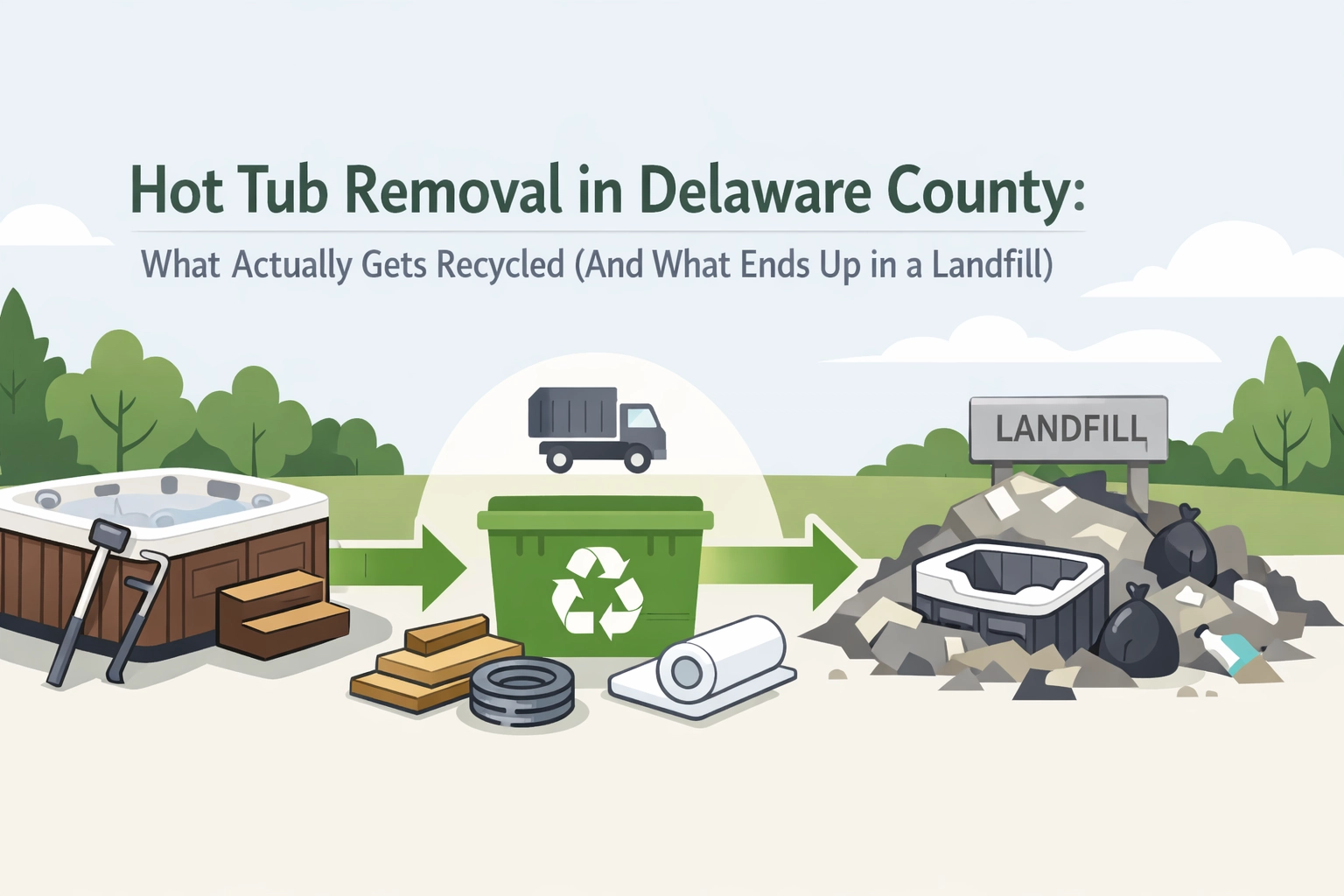
You finally decided to remove that old hot tub taking up space in your backyard. But before you call the first junk hauler you find online, here's something worth knowing: most of that hot tub doesn't have to end up in a landfill.
The problem? Not every removal company actually recycles what they say they do.
In Delaware County, how your hot tub gets disposed of depends entirely on who you hire. Some companies talk about eco-friendly practices but dump everything at the transfer station. Others, like Narcise Construction Group, actually break down the unit and separate materials for proper recycling and disposal.
Let's break down what's inside your hot tub, what can actually be recycled, and what you should ask before hiring anyone to haul it away.
What's Actually Inside Your Hot Tub
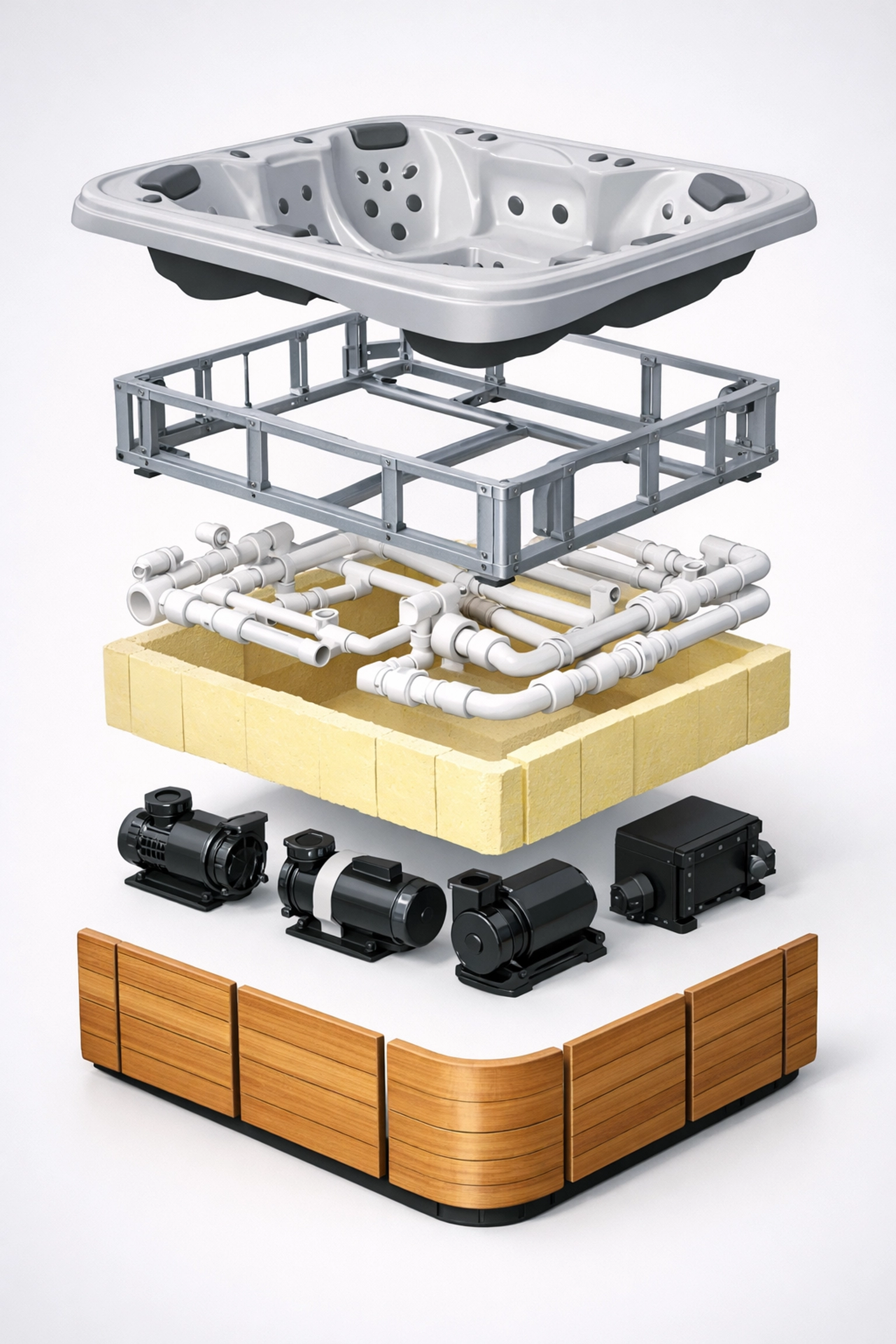
A hot tub isn't just one big piece of plastic. It's a complex unit with multiple materials that all require different handling.
Here's what makes up a typical hot tub:
- Acrylic or fiberglass shell , the main body you see
- ABS plastic base , the bottom pan that sits underneath
- Metal framing , steel or aluminum support structure
- PVC piping , plumbing lines throughout the unit
- Foam insulation , polyurethane spray foam filling the cabinet
- Pumps and motors , electric motors with metal housing
- Heater elements , metal heating components
- Control boards , electronic circuit boards and wiring
- Wood or synthetic cabinet panels , exterior skirting
Each of these materials has different recycling potential. Some are easy to recycle. Others require specialized processing. And some genuinely have limited recycling options available.
What Can Actually Be Recycled
Let's start with the good news. Several major components of your hot tub can be diverted from landfills if the removal company takes the time to separate them.
Metal Components , the most recyclable part of your hot tub.
The steel or aluminum framing, pump housings, heater elements, and metal brackets can all go to metal recycling facilities. Metal recycling is straightforward and widely available in Delaware County.
Pumps and Motors , valuable for parts and scrap metal.
Electric motors contain copper wiring and metal components that recycling facilities want. Some motors can be refurbished and resold. Others get broken down for raw materials.
PVC Piping , recyclable, but not always accepted.
PVC is technically recyclable, but not all facilities accept it. Companies that actually care about recycling will find the right facility. Others just toss it in the dumpster.
Control Boards and Wiring , electronic waste recycling.
Circuit boards and electrical wiring contain recoverable metals like copper, gold, and silver. These need to go to certified e-waste recycling centers, not your regular trash.
Wood Cabinet Panels , depends on condition and treatment.
Untreated wood can be chipped for mulch or other uses. Pressure-treated or composite materials have more limited options but can sometimes be recycled through specialty facilities.
What Typically Ends Up in Landfills
Now for the reality check. Some hot tub materials are genuinely difficult to recycle with current infrastructure.
Acrylic and Fiberglass Shells , the biggest landfill contributor.
This is the main body of your hot tub, and it's the trickiest part. While some companies claim to grind these down for recycling, the reality is that most acrylic and fiberglass shells end up in landfills. The material can be ground into aggregate, but finding facilities that accept it is challenging.
Spray Foam Insulation , limited recycling options.
The polyurethane foam filling the cabinet doesn't have many recycling pathways. Some companies compress it to reduce landfill volume, but most of it gets disposed of.
Contaminated Components , chemicals rule them out.
Any parts exposed to spa chemicals, algae, or mold growth may be rejected by recycling facilities due to contamination concerns.
Mixed Material Parts , too complex to separate economically.
Some components combine multiple materials (plastic bonded to metal, for example) that can't be cost-effectively separated for recycling.
The Delaware County Reality Check
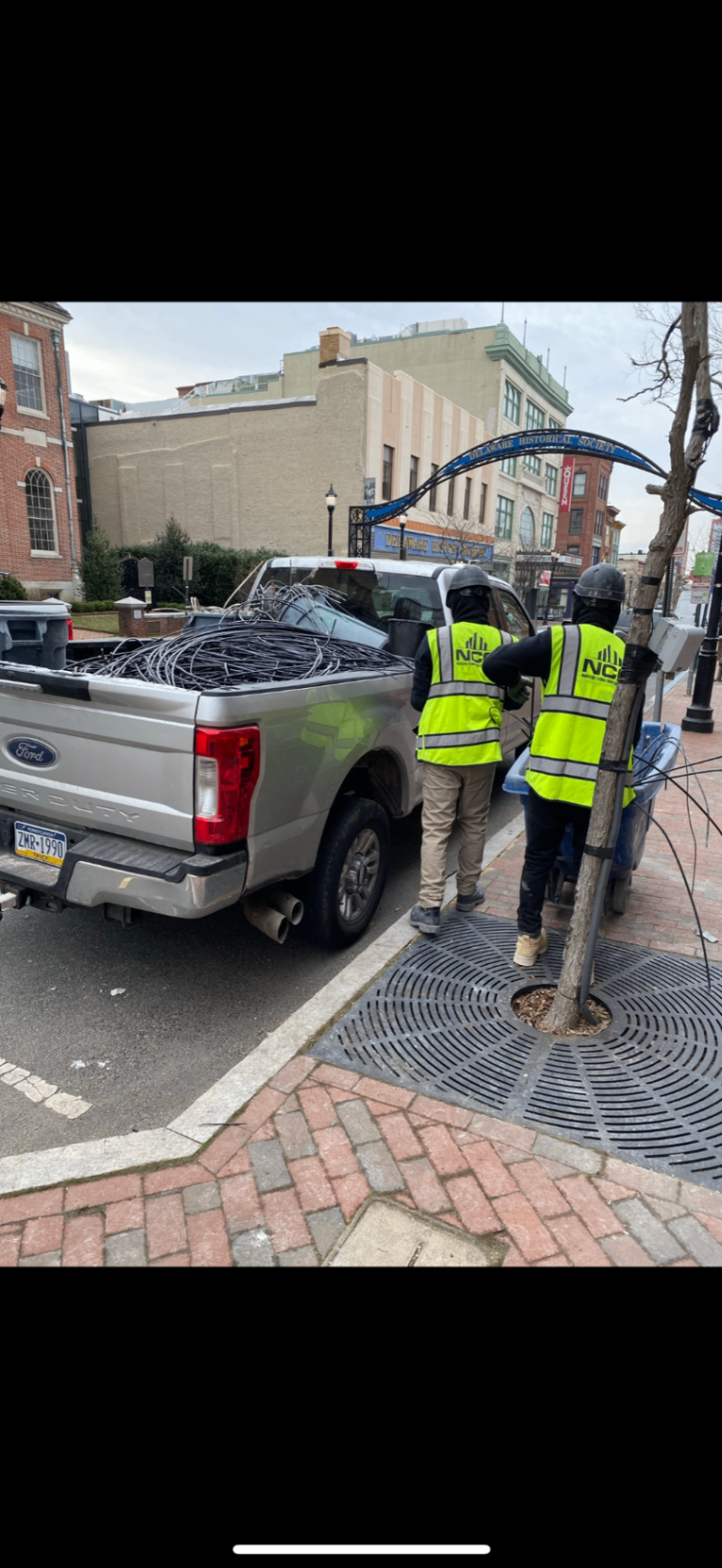
Here's what matters: most junk haulers in Delaware County don't actually separate materials for recycling.
Why? Because it's faster and cheaper to toss everything into a dumpster and drive to the nearest landfill or transfer station.
According to industry data, national junk removal companies recycle or reuse up to 60% of materials they haul away. But that's an average across all items, furniture, appliances, yard waste, and demolition debris. For hot tubs specifically, the rate is likely much lower unless the company explicitly breaks down the unit.
If eco-friendly disposal matters to you, you need to ask the right questions:
- Do you dismantle the hot tub or haul it away whole?
- Which components do you actually recycle?
- Where do you take the materials that can't be recycled?
- Can you provide documentation of proper disposal?
Companies that genuinely prioritize recycling will answer these questions clearly. Companies that just want your money will give vague responses about "eco-friendly practices."
Why Professional Removal Matters
You might be tempted to cut up that hot tub yourself and save a few bucks.
But here's what that actually involves:
Breaking down a hot tub requires sawing through fiberglass or acrylic (which creates toxic dust), disconnecting electrical components safely, cutting PVC plumbing, and disposing of hundreds of pounds of materials properly. You'll need a reciprocating saw, safety equipment, disposal permits, and a way to transport bulky materials to recycling centers and landfills.
Most homeowners who start this project end up calling professionals halfway through when they realize how labor-intensive it is.
Professional removal companies handle the entire process: disconnection, dismantling, material separation, hauling, and proper disposal. You don't breathe fiberglass dust. You don't load 800 pounds of shell pieces into your truck. And you don't spend your weekend figuring out which facility accepts which materials.
Narcise Construction Group's Approach to Hot Tub Removal
At Narcise Construction Group, we're not a junk hauler.
We're a licensed demolition contractor with haul-away services designed specifically for homeowners and commercial properties in Delaware County who want things done right.
Here's how we handle hot tub removal differently:
We Dismantle, Not Just Haul
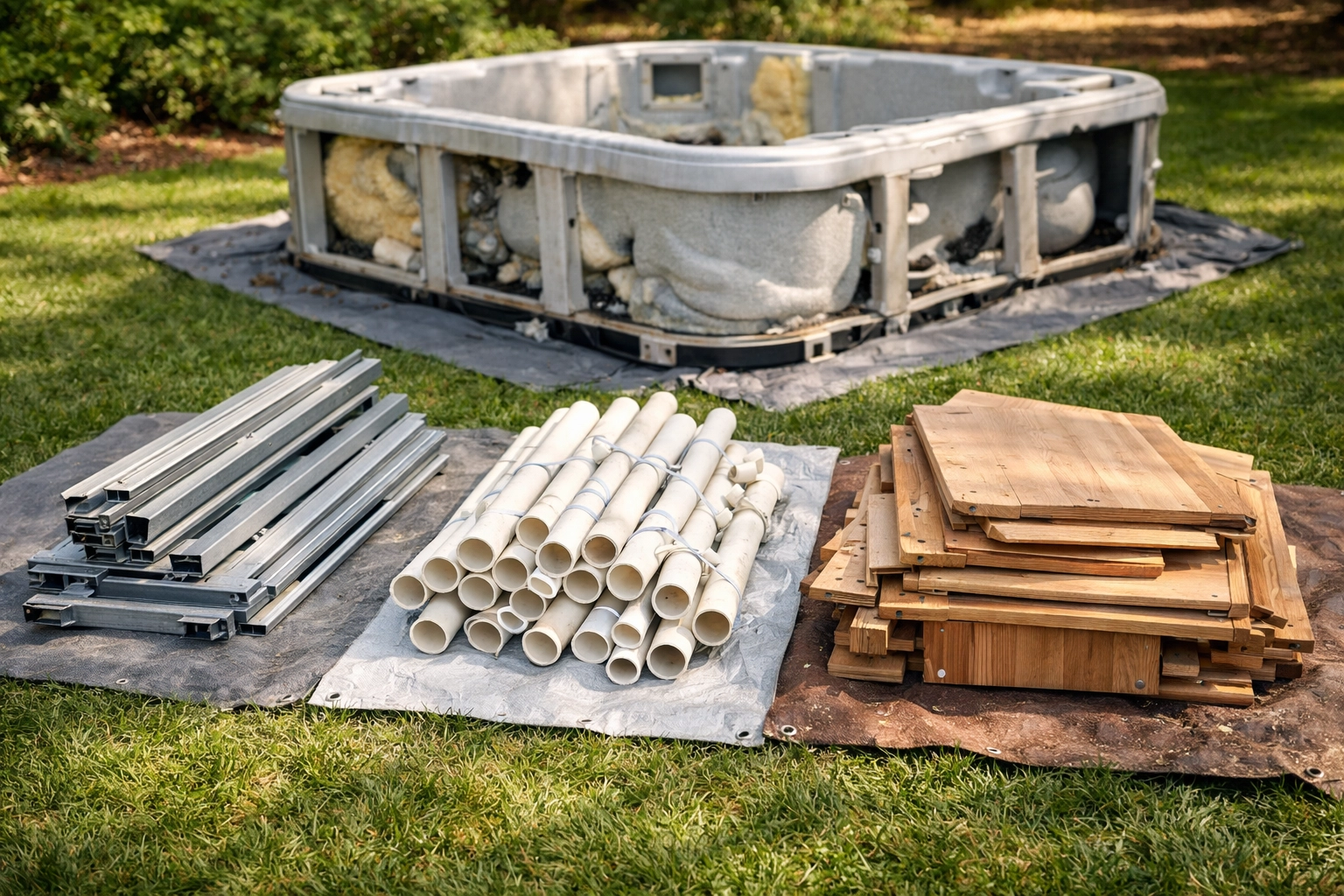
We don't just strap your hot tub to a truck and dump it whole at the transfer station. We break down the unit on-site, separate recyclable components from landfill-bound materials, and handle disposal properly.
Metal Components Go to Recycling Facilities
All metal framing, pump housings, heater elements, and brackets get separated and sent to metal recycling centers. No exceptions.
Electronic Waste Gets Proper Handling
Control boards, wiring, and electrical components go to certified e-waste facilities, not your regular trash pickup.
We're Honest About Landfill Reality
We won't promise that everything gets recycled, because that's not realistic. Shells and foam insulation typically end up in landfills. But we minimize landfill waste by recycling everything that actually has a recycling pathway.
Licensed, Insured, and Transparent
We're fully licensed and insured for demolition work in Delaware County. You get upfront pricing, clear communication, and documentation of proper disposal when requested.
What to Expect from Start to Finish
Step 1: Contact Us for Pricing 📲
Text us photos of your hot tub and site access. We'll give you honest, upfront pricing, no surprises.
Step 2: Schedule Your Removal
We work around your schedule. Most hot tub removals happen in a single day.
Step 3: Disconnection and Prep
If your hot tub is still connected to electrical and plumbing, we handle safe disconnection. (Some units require a licensed electrician, which we can coordinate.)
Step 4: On-Site Dismantling
We break down the unit on your property, separate materials, and prepare everything for hauling.
Step 5: Haul-Away and Disposal
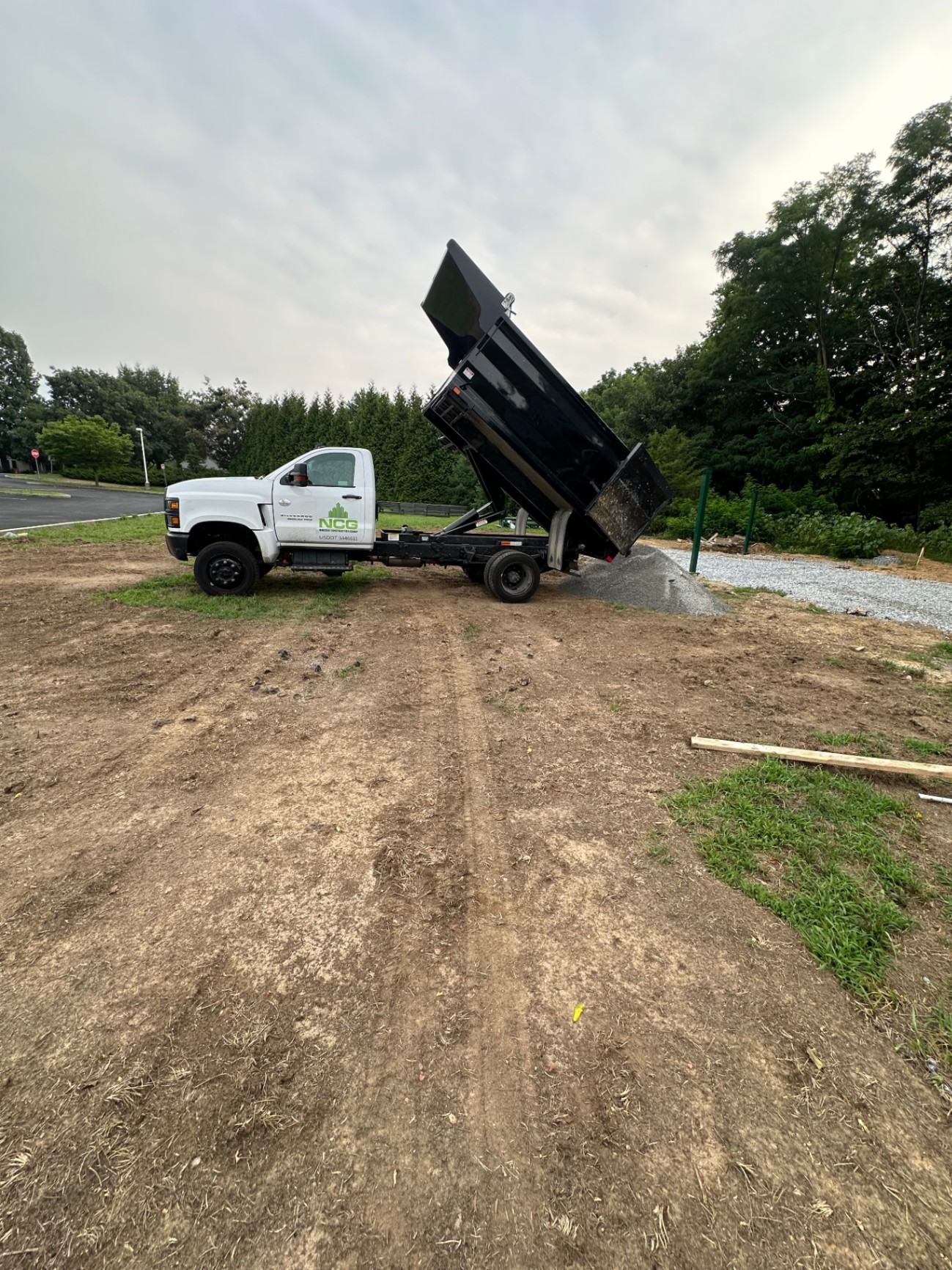
We load everything onto our trucks and handle transportation to recycling facilities and disposal sites.
Step 6: Site Cleanup
We leave your property clean, no debris, no damage to your yard or deck.
Common Questions About Hot Tub Recycling
Can I donate my old hot tub instead of removing it?
Only if it's in working condition. Most removal situations involve broken or outdated units that charities won't accept.
How much of my hot tub will actually be recycled?
Typically 30-40% by weight, mostly metal components, pumps, and some PVC. The shell and insulation usually go to landfills.
Is professional removal worth the cost compared to DIY?
If you value your time, safety, and proper disposal, yes. DIY hot tub removal is a multi-day project for most homeowners.
Do you handle in-ground hot tubs too?
Yes. In-ground removal is more complex and requires excavation, but we handle those projects as well.
What if my hot tub is in a hard-to-reach location?
We assess access during the estimate. Most backyards are manageable, even without direct truck access.
Ready to Remove That Old Hot Tub?
If you're in Delaware County and want your hot tub removed by a licensed demolition contractor who actually cares about proper disposal, we can help.
📞 Call Narcise Construction Group for honest pricing and professional hot tub removal.
We're not the cheapest option: we're the right option if you want the job done safely, cleanly, and with minimal environmental impact.
Learn more about our hot tub removal services or reach out today to schedule your removal.