
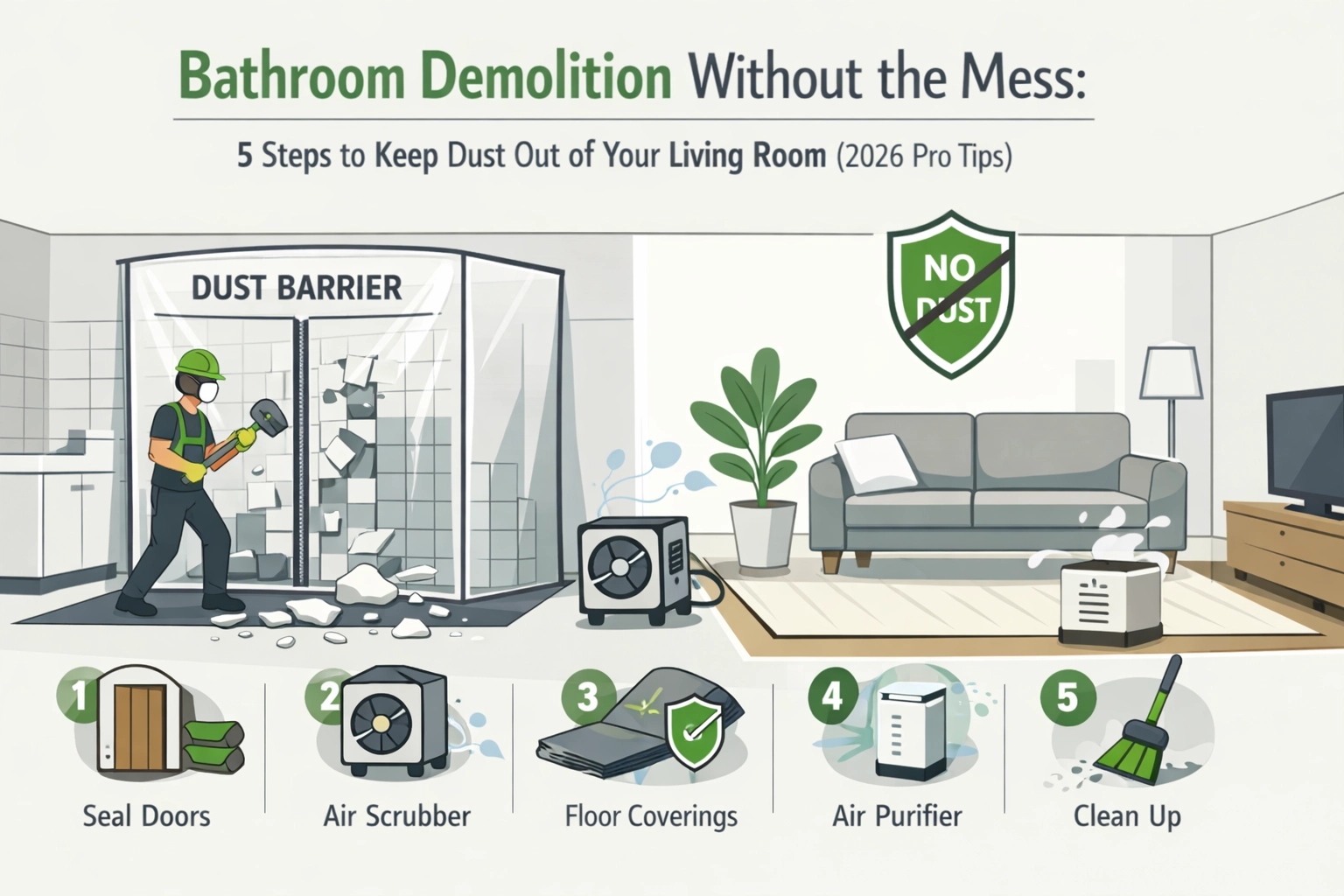
Bathroom demo doesn't have to turn your entire house into a dust-covered disaster zone.
If you've been putting off that bathroom renovation because you're worried about dust invading your living room, coating your furniture, and making your home unlivable for weeks : you're not alone. Homeowners across Delaware County and Chester County face this exact concern when planning demo work.
The good news? With the right prep and professional techniques, you can keep dust contained to the work area. Here's exactly how we approach bathroom demolition at Narcise Construction Group to protect the rest of your home.
Step 1: Create a Complete Dust Barrier System
Before anyone swings a hammer, the bathroom needs to be completely sealed off from the rest of your house.
This isn't about taping a plastic sheet over the doorway and hoping for the best. Professional dust containment starts with heavy-duty ZipWall systems or 6-mil plastic sheeting that creates an airtight seal.
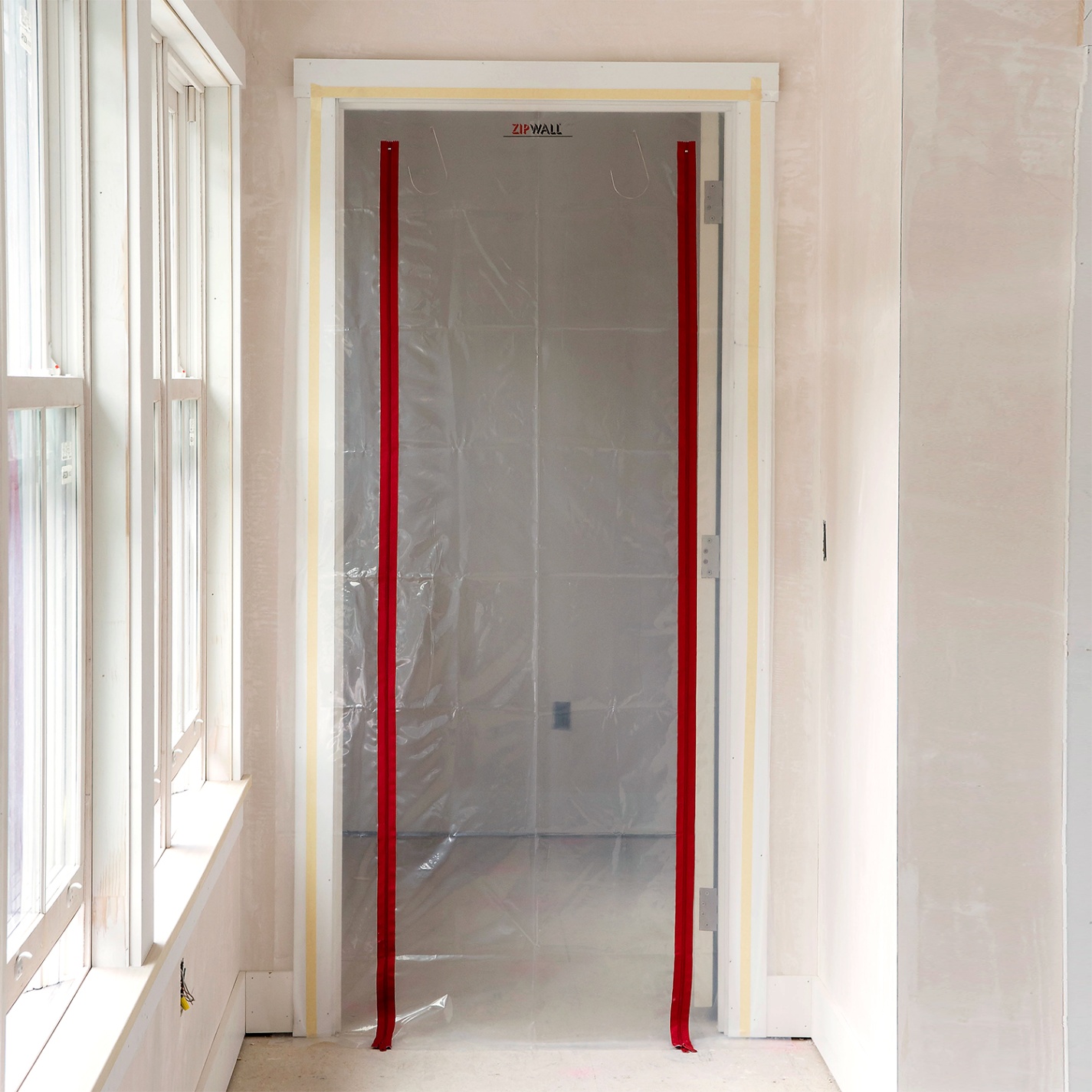
Here's what proper barrier installation looks like:
- Cover every opening : doorways, return air vents, even the gap under the door
- Use ZipWalls with zippered access points so workers can enter and exit without breaking the seal
- Tape all edges with contractor-grade adhesive tape, not cheap painter's tape
- Seal off HVAC vents inside the bathroom so dust doesn't travel through your ductwork
For homes in Delco and Chesco built before 1980, this step is even more critical. Older bathrooms often contain tile adhesives and materials that generate finer, more invasive dust particles. The barrier system needs to be bulletproof.
One entry point stays accessible with a zipper door. Everything else gets sealed tight.
Step 2: Establish Negative Air Pressure
This is where most DIY bathroom demos fail : and where professional contractors separate themselves from handyman crews.
You want the bathroom at a lower air pressure than surrounding rooms. This creates a vacuum effect that pulls dust toward the work area instead of pushing it into your hallway.
How it works:
- Position a negative air machine near the bathroom window or exterior door
- Run the exhaust hose outside to vent filtered air
- Leave the entry door slightly cracked to allow fresh air to be drawn in
- The machine pulls contaminated air through HEPA filters and exhausts it outside
Think of it like this: air always moves from high pressure to low pressure. If the bathroom is at lower pressure, dust-laden air gets sucked toward the work zone : not pushed into your living room.
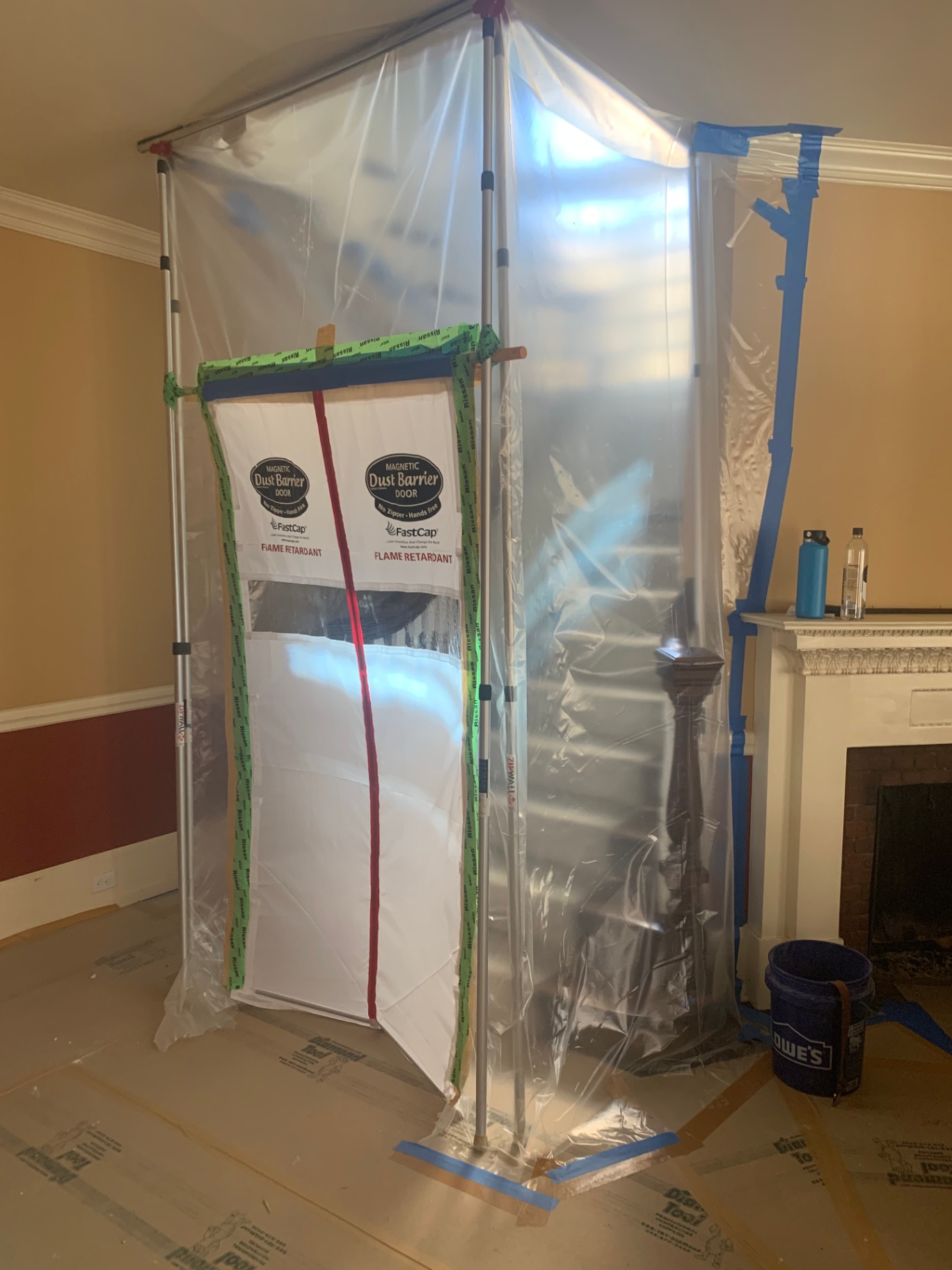
Negative air machines aren't cheap, and they're not something most homeowners keep in their garage. This is specialized equipment that professional demo contractors bring to every job.
Step 3: Wet Down Surfaces Before Cutting or Breaking
The simplest dust control method is also one of the most effective: spray everything with water before demolition starts.
Dry materials create airborne dust. Damp materials don't.
Before we cut tile, remove drywall, or break up a shower pan, we mist the surfaces with water. It weighs down dust particles so they drop to the floor instead of floating through the air.
For concrete or tile cutting, we use wet-cutting techniques whenever possible. The water cools the blade and traps dust at the source. You'll see a slurry on the floor instead of a dust cloud in the air.
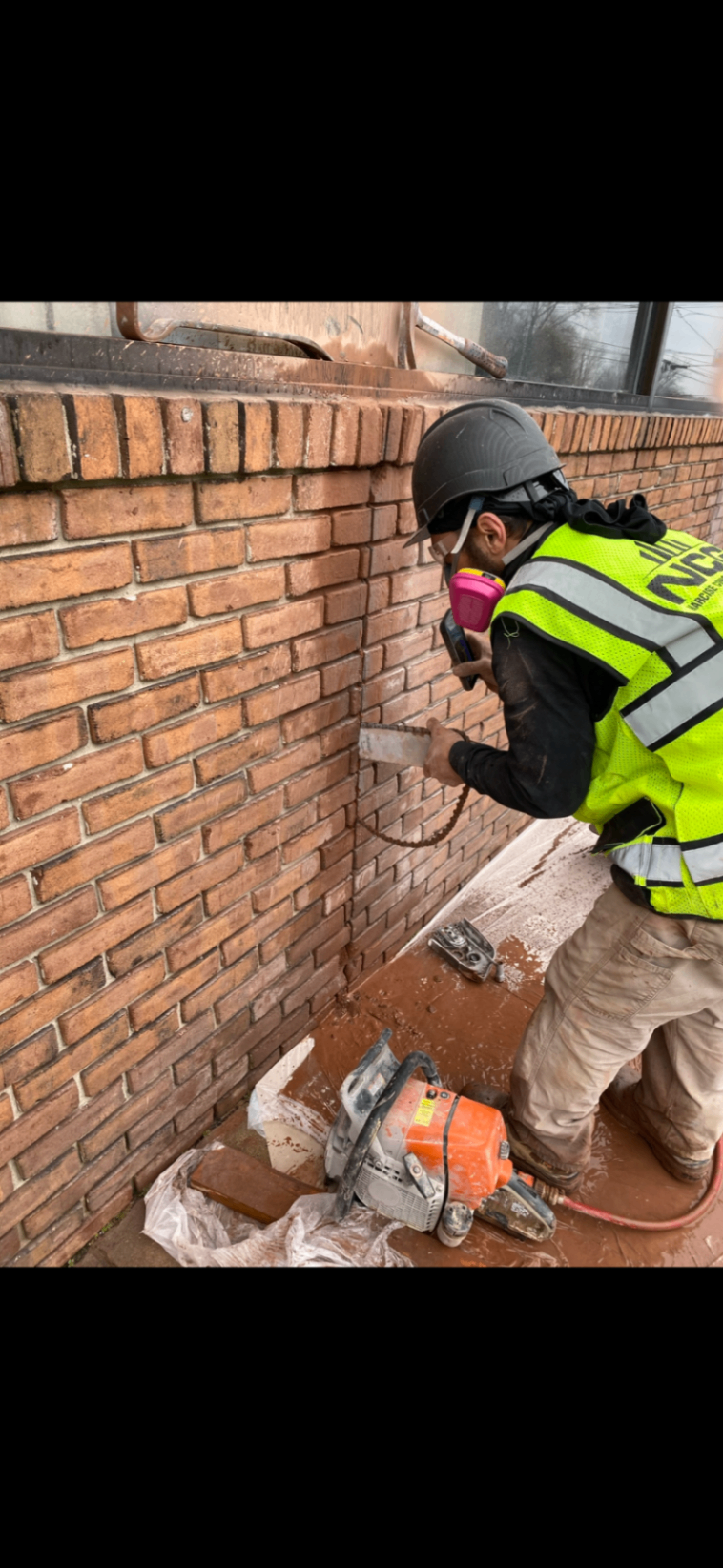
This approach is especially important in Chester County homes with porcelain tile and thick cement board installations. Those materials generate ultra-fine silica dust when cut dry : the kind that travels through your house and settles on everything.
Step 4: Run Air Scrubbers and HEPA Vacuums Constantly
Even with barriers, negative pressure, and wet techniques, some dust still gets airborne inside the bathroom. That's where air scrubbers come in.
Air scrubbers pull in contaminated air, filter out fine particles, and release clean air back into the space. They're essentially industrial-grade air purifiers designed for construction environments.
We run air scrubbers throughout the entire demo process : not just during the dustiest tasks. Combined with HEPA-filtered vacuums for cleanup, this equipment captures:
- Drywall dust
- Tile and grout particles
- Mold spores (common in older Delco bathrooms)
- Allergens and fine debris
HEPA filters trap particles as small as 0.3 microns. For context, that's about 300 times smaller than the width of a human hair. Regular shop vacs just blow that stuff back into the air.
Step 5: Control Airflow and Ventilation
Your bathroom's exhaust fan becomes part of your dust control system during demo.
If your bathroom has a working exhaust fan, we'll run it to help pull dust out of the space. If it doesn't : or if the fan vents into the attic instead of outside : we'll install a temporary window fan to create proper ventilation.
The key is maintaining controlled airflow that directs dust outside, not into adjacent rooms.
Here's what not to do:
- Don't open windows throughout the house hoping to "air it out" : this disrupts the negative pressure system
- Don't run your central HVAC system during demo : even with sealed vents, dust can infiltrate ductwork
- Don't leave interior doors open in other parts of the house
Instead, the bathroom door stays closed (or slightly ajar for negative pressure), and all airflow is directed outside through exhaust systems.
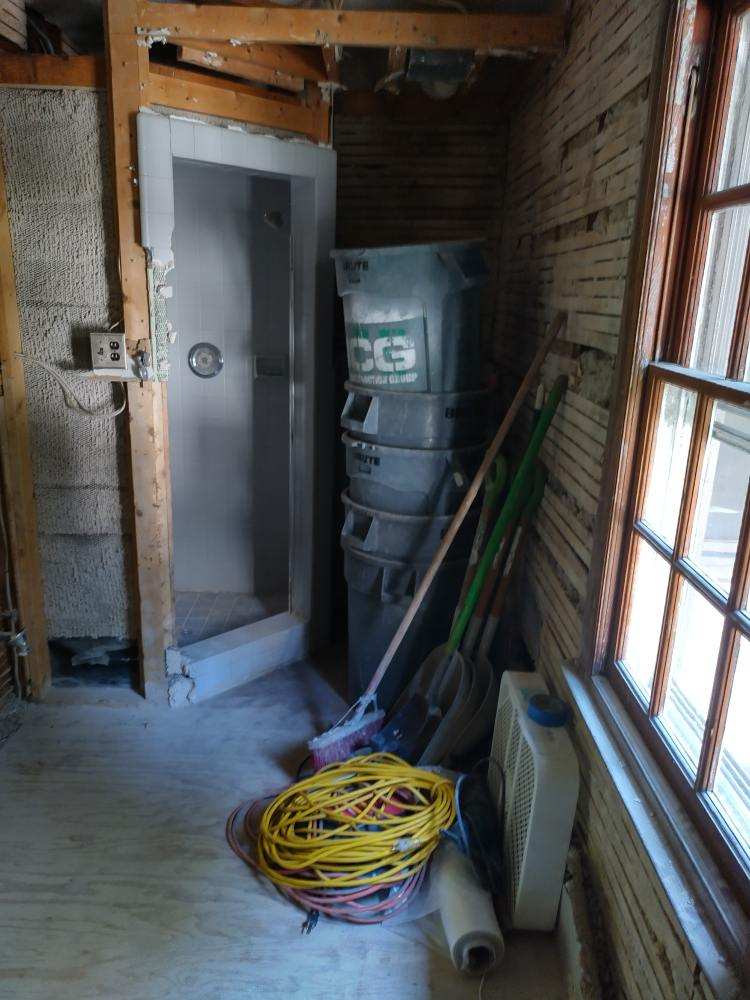
Why Professional Bathroom Demo Matters in Delaware and Chester Counties
You can buy plastic sheeting and tape at Home Depot. But that's not the same as having ZipWalls, negative air machines, air scrubbers, and a crew trained in dust containment protocols.
Narcise Construction Group handles bathroom demolition for homeowners across Delco and Chesco who want their renovations done cleanly, safely, and without turning their homes into construction zones.
We're not a junk removal service or a handyman crew. We're a fully licensed and insured demolition contractor specializing in interior demo work that requires precision, containment, and professionalism.
Whether you're gutting a 1960s bathroom in Havertown or removing tile in a West Chester ranch, the same dust control principles apply. The difference is having the right equipment and experience to execute them properly.
Keep Your Home Livable During Bathroom Renovations
Bathroom demo doesn't have to be a nightmare for the rest of your house.
With proper dust barriers, negative air pressure, wet techniques, air filtration, and controlled ventilation, you can renovate your bathroom without dust coating your furniture, carpets, and air vents.
If you're planning a bathroom renovation in Delaware County or Chester County and want it done the right way, we're here to help.
📞 Call or text us for a free quote
📩 Send us photos of your bathroom for fast pricing
Visit narciseconstructiongroup.com to learn more about our residential demolition services and see how we keep your home clean during every project.
Your bathroom renovation starts with professional demo. Let's keep the dust where it belongs : contained and controlled.