
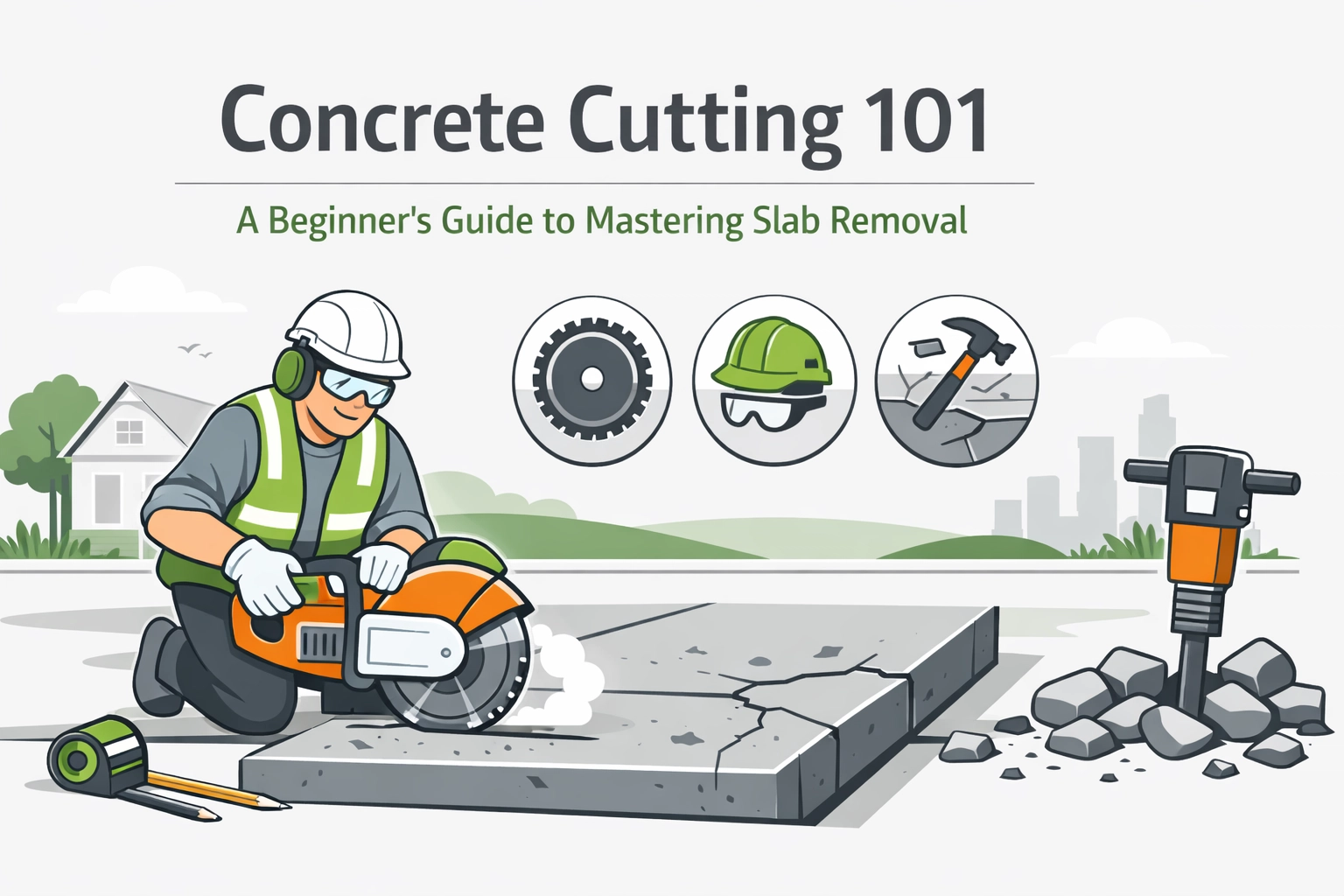
Thinking about removing a concrete slab from your basement, garage, or commercial space? Maybe you're planning a kitchen remodel that requires cutting through a floor. Or perhaps you need to access underground plumbing.
Whatever the reason, concrete slab removal isn't a weekend DIY project you tackle with a rented saw and a prayer.
It's precise, technical work that requires specialized equipment, proper technique, and serious safety protocols. One wrong move and you're looking at cracked slabs, damaged utilities, airborne silica dust, or worse, a trip to the ER.
This guide walks you through the fundamentals of concrete cutting and slab removal, so you know exactly what's involved before you pick up a saw or call in a pro.
What Is Concrete Cutting (And When Do You Need It)?
Concrete cutting is the controlled removal or modification of hardened concrete using specialized saws and equipment. Unlike demolition with a jackhammer, which is loud, messy, and imprecise, concrete cutting gives you clean, accurate lines.
You'll need concrete cutting for:
- Removing sections of a basement or garage slab for plumbing access
- Creating openings in floors or walls for ductwork or electrical runs
- Cutting control joints to prevent random cracking in new pours
- Demolishing old patios, driveways, or sidewalks in sections
- Preparing slabs for new flooring or structural modifications
The goal isn't just to break up concrete. It's to remove it safely, cleanly, and efficiently without damaging what stays behind.
The Right Tools Make All the Difference
Walk into a big box store and you'll find handheld concrete saws for rent. Those work fine for small cuts in pavers or cinder blocks.
But for slab removal? You need professional-grade equipment.
Here's what the pros use:
Walk-Behind Floor Saws
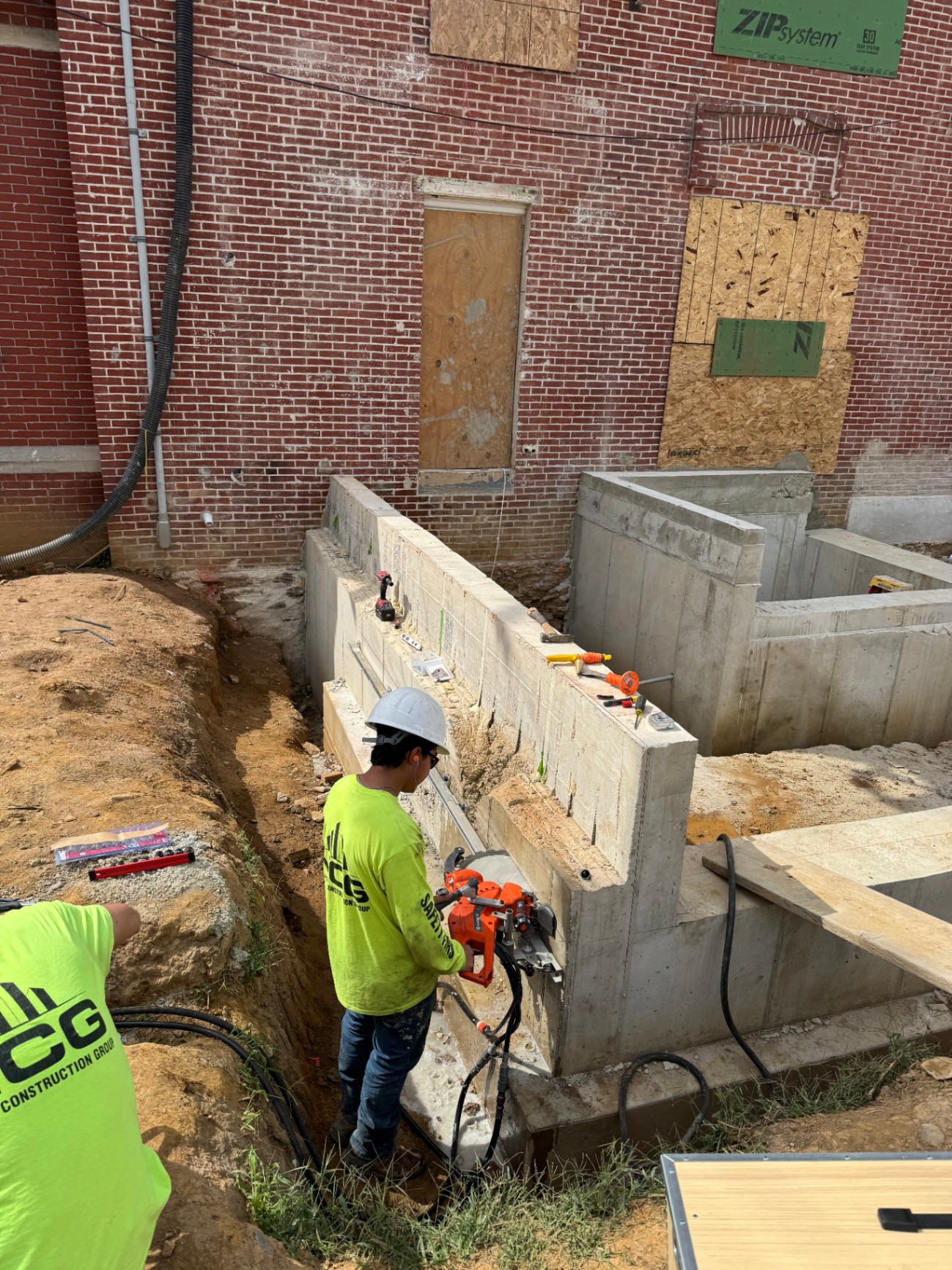
These are the workhorses of slab removal. They're designed to cut deep, straight lines through thick concrete, up to 12 inches or more depending on the blade size. Walk-behind saws use diamond blades that stay cool with water (wet cutting) or specialized dust control systems (dry cutting).
Hydraulic Cutters and Breakers
After you make your cuts, you need to break the slab into manageable pieces for removal. Hydraulic breakers deliver controlled, high-force impacts without the deafening noise and vibration of pneumatic jackhammers. They're faster, quieter, and easier on your arms.
Handheld Concrete Saws
For detail work, cutting around obstacles, making corner cuts, or accessing tight spaces, handheld saws (either gas or electric) give you precision. They're not for full slab removal, but they're essential for finishing cuts.
Core Drills
Need to remove a circular section or create holes for pipes? Core drills bore clean, round openings through concrete without spalling or cracking the surrounding slab.
At Narcise Construction Group, we bring the right tool for every job, not just what's easiest to haul or cheapest to rent.
Safety First: Why You Can't Skip the Prep
Concrete cutting creates serious hazards. Silica dust. Flying debris. Blade kickback. Noise. Vibration. Water runoff carrying cement slurry.
Before you cut, you need to:
- Mark your cut lines clearly using chalk or paint. Measure twice, cut once.
- Check for utilities. Hitting a gas line, water main, or electrical conduit is a nightmare. Use ground-penetrating radar or call 811.
- Seal off the work area. Cover HVAC vents, doors, and windows with plastic sheeting to contain dust.
- Wear proper PPE. At minimum: respirator (N95 or better), safety glasses, hearing protection, gloves, and steel-toe boots.
- Get permits if required. Some municipalities require permits for structural modifications.
And here's the thing most people don't realize: wet cutting reduces dust but creates slurry, a thick, cement-laden sludge that can clog drains, stain surfaces, and create slip hazards if not managed properly.
That's where the Narcise Clean approach comes in.
The Narcise Clean Approach: Dust and Slurry Management
We don't just cut concrete and leave you with a mess. Every job starts with containment and ends with thorough cleanup.
Here's how we keep your home or business clean:
Dust Containment Systems
If we're dry cutting, we use industrial vacuums with HEPA filters attached directly to the saw. This captures silica dust at the source, before it gets into your HVAC system or settles on every surface in the building.
Water Management for Wet Cutting
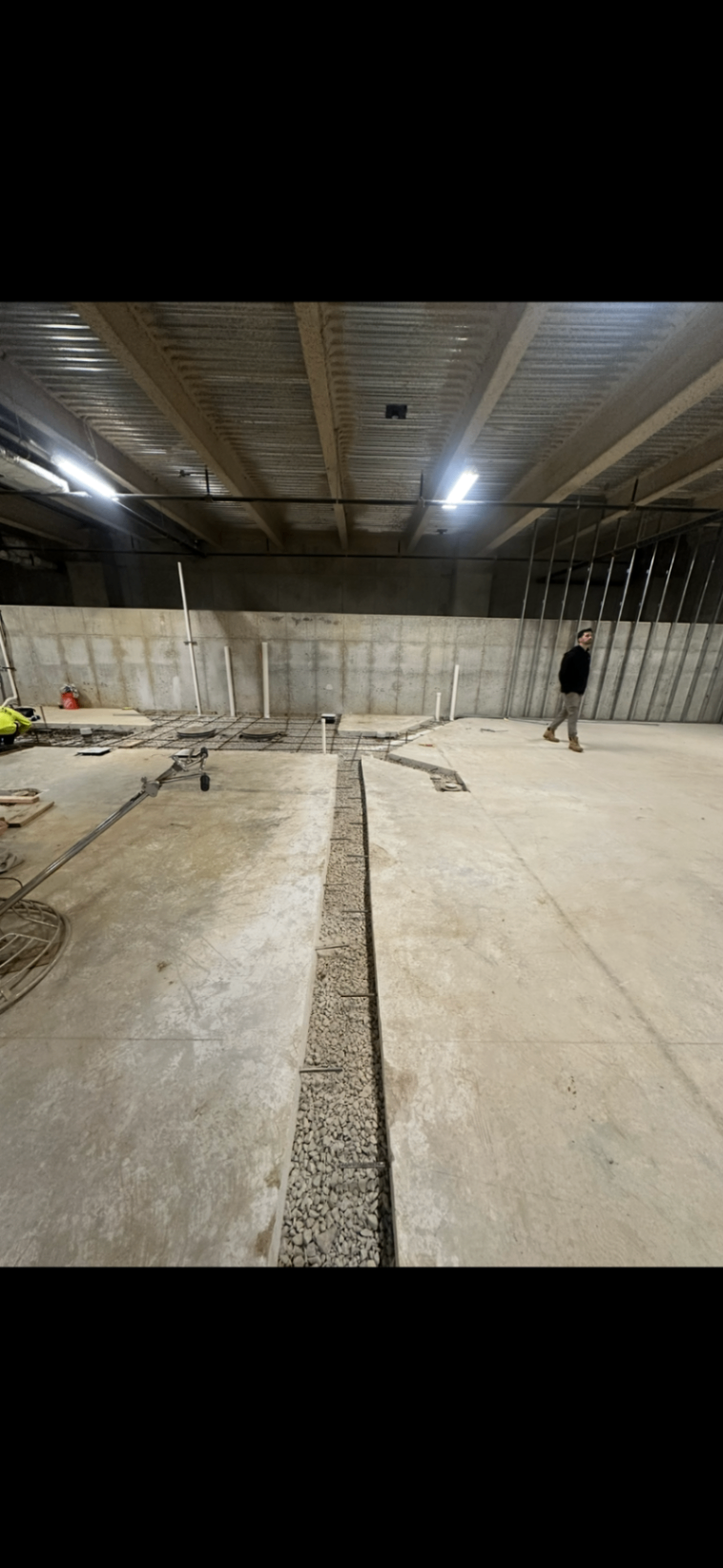
Wet cutting keeps dust down, but it creates slurry. We use water containment mats, shop vacs, and squeegees to control runoff. Slurry gets collected, not washed into your drains or landscaping.
Plastic Barriers and Negative Air Pressure
We seal off the work area with heavy-duty plastic sheeting. For larger jobs, we set up negative air machines that pull airborne particles into filters, preventing dust from migrating to other rooms.
Post-Cut Cleanup
After removal, we don't just haul away concrete chunks and call it done. We sweep, vacuum, and mop the area. We wipe down surfaces. We leave your space ready for the next phase of your project.
You can read more about our containment process in The Narcise Clean: How We Keep Demolition Dust Out of the Rest of Your House.
How to Cut Concrete: The Step-by-Step Technique
Understanding the process helps you see why this work takes skill, and why cutting corners (literally) leads to problems.
Step 1: Start with a Surface Cut
Your first pass should be shallow, around ½ inch deep. This creates a guide groove that keeps the blade tracking straight and prevents it from grabbing or wandering. It's like drawing a pencil line before you cut wood.
Step 2: Use Step Cutting for Depth
You can't cut through a 4-inch slab in one pass. Instead, you make multiple passes over the same line, going progressively deeper each time. This is called step cutting.
Why? Because trying to force a blade through thick concrete causes dangerous blade binding, overheating, and kickback. Step cutting keeps the blade cool, extends blade life, and gives you better control.
Step 3: Set the Right Depth and Spacing
For control joints (cuts that guide where concrete cracks as it settles), your depth should be 25-33% of the slab thickness. So a 4-inch slab gets a cut about 1 to 1.3 inches deep.
Spacing between cuts? Use the rule of thumb: 24-36 times the slab thickness. For a 4-inch slab, that's cuts every 8 to 12 feet.
Step 4: Never Turn Corners While Cutting
Once the blade is deep in concrete, changing direction is dangerous. The blade can bind, the saw can kick back, and you lose control.
Always stop the saw, lift the blade, reposition, and start your next cut from a dead stop.
Step 5: Break and Remove the Slab
After cutting, you'll use hydraulic breakers or pry bars to fracture the slab along your cut lines. Then it's a matter of hauling out chunks, which, for a 4-inch residential slab, weigh around 50 pounds per square foot.
Why Hiring a Pro Saves You Money (Yes, Really)
Renting a walk-behind saw costs $150-$300 per day. Add in blade rental, safety gear, and disposal fees, and you're looking at $500+ out of pocket.
Now factor in what most DIYers don't account for:
- Time. Cutting and removing even a small slab takes 1-2 full days: longer if you hit unexpected rebar or make a mistake.
- Mistakes. Cut too shallow and you'll need multiple passes. Cut off-line and you've wasted hours. Hit a utility and you're looking at thousands in repairs.
- Equipment damage. Blade binding or overheating can destroy a $200 diamond blade in seconds. Rental insurance doesn't always cover operator error.
- Injury risk. Concrete saws kick back. Slabs weigh hundreds of pounds. Silica dust causes irreversible lung damage. One hospital visit wipes out any savings.
- Disposal. You can't just toss concrete in your trash. You need a dumpster or a dump trailer, plus fees for concrete disposal: often $75+ per ton.
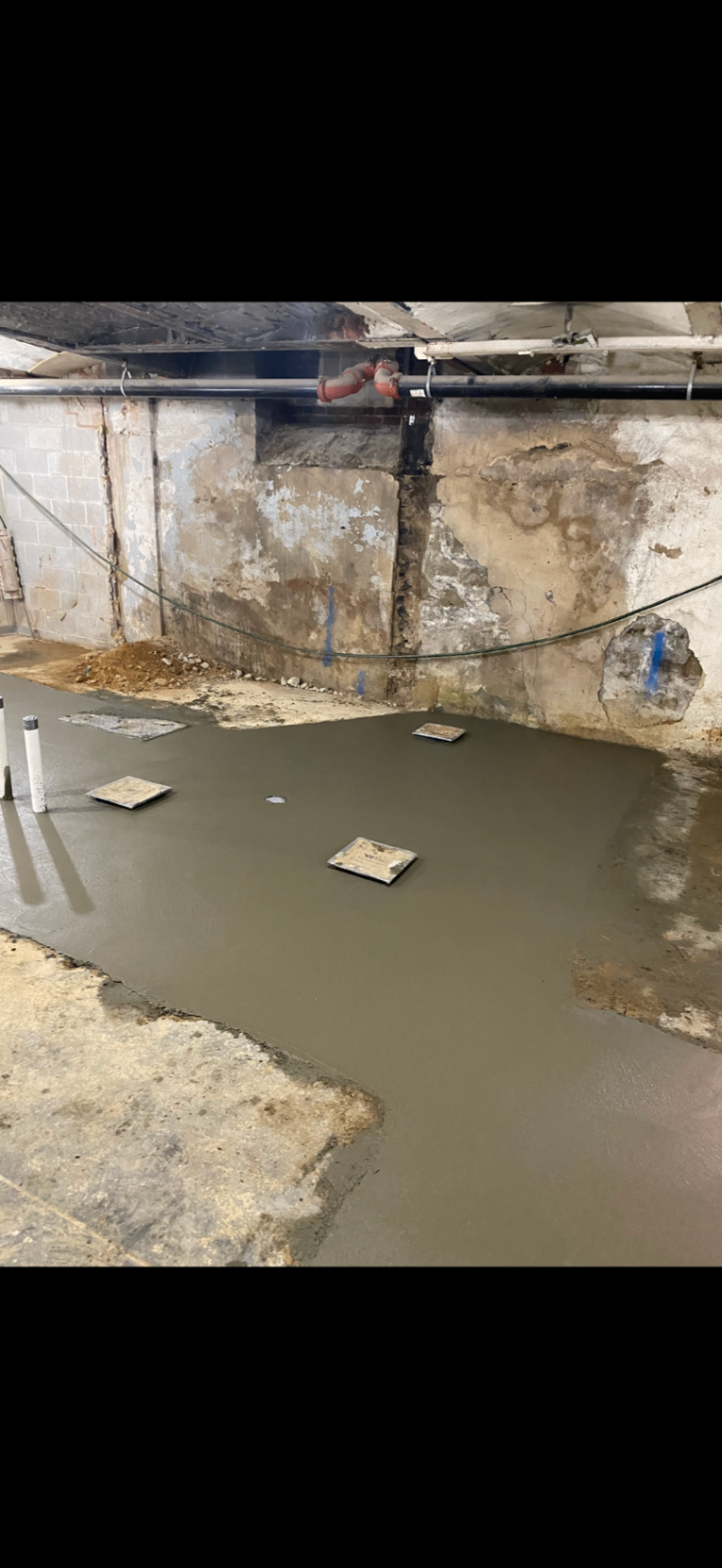
A professional crew like Narcise Construction Group brings the right equipment, handles permits, manages dust and slurry, completes the job in hours (not days), and hauls everything away.
You get speed, safety, and zero hassle. That's not an expense: it's an investment in doing it right the first time.
Serving Delaware County, Chester County, and South Jersey
Whether you're in Media, West Chester, Drexel Hill, Havertown, or across the bridge in South Jersey, Narcise Construction Group provides concrete cutting and slab removal for residential and commercial projects.
We're not a junk hauler with a borrowed saw. We're a fully licensed and insured demolition contractor specializing in precision concrete work, interior demolition, and renovation prep.
From small garage slabs to large commercial floor cuts, we handle it safely, cleanly, and efficiently.
Ready to Get Started?
Concrete cutting isn't something you figure out as you go. It's technical work that requires the right tools, proper technique, and serious attention to safety and cleanliness.
If you're planning a kitchen remodel, basement renovation, or commercial tenant improvement that involves slab removal, let's talk.
📞 Call or text us photos of your project for fast pricing.
📩 Honest, upfront estimates: no surprises.
📲 Serving Delaware County, Chester County, and South Jersey.
Visit narciseconstructiongroup.com or check out our demolition expertise at Top Local Demolition Companies: Services, Safety and Efficiency Explained.
Let's get your slab removed the right way: so you can move forward with your project on time and on budget.