
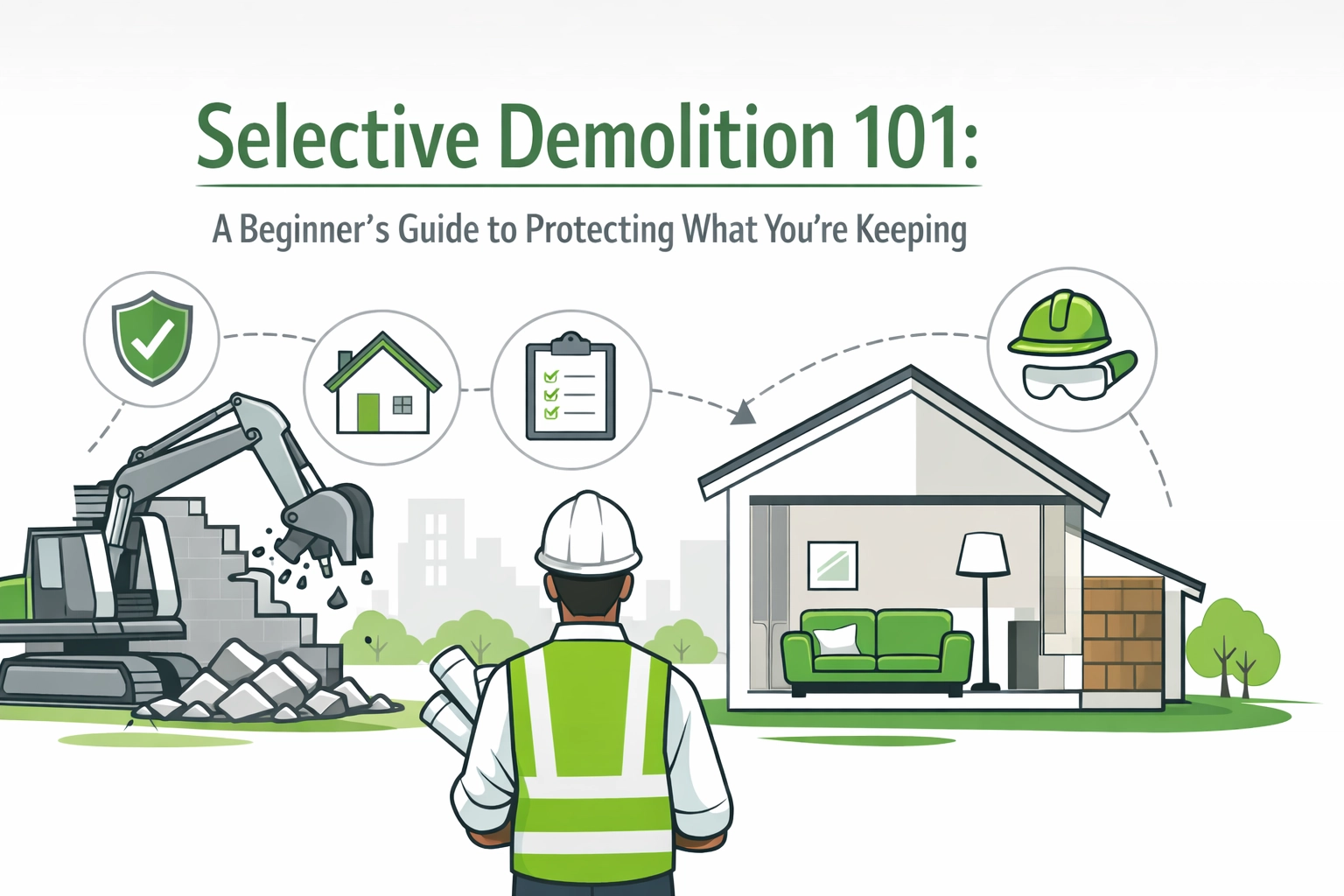
You're finally ready to tackle that kitchen renovation or bathroom remodel. But here's the thing, you're not tearing down the whole house. You need the rest of your home to stay intact, clean, and livable.
That's where selective demolition comes in.
Unlike full-scale teardowns, selective demo is all about surgical precision. You're removing specific walls, fixtures, or sections while keeping everything else protected and undamaged. It's demolition with a scalpel, not a wrecking ball.
At Narcise Construction Group, we've helped hundreds of homeowners in Chester County and Delaware County navigate selective demo projects. And we've learned one thing: the difference between a nightmare renovation and a smooth one comes down to how well you protect what you're keeping.
Let's walk through exactly how selective demolition works, and what you should expect from a professional crew.
What Makes Selective Demolition Different?
Think of selective demolition as reverse construction.
Instead of building up, you're carefully taking apart, but only the parts you want gone. The goal is to remove targeted sections (a wall, a kitchen, a bathroom) without damaging adjacent rooms, floors, or structural elements.
Here's what that looks like in practice:
- A kitchen gut that leaves your dining room walls and hardwood floors pristine
- A bathroom tearout that doesn't crack the tiles in the hallway
- A wall removal that protects the ceiling joists and electrical systems around it
It takes more planning, more protection, and a lot more skill than swinging a sledgehammer and hoping for the best.
Why Protection Matters More Than Speed
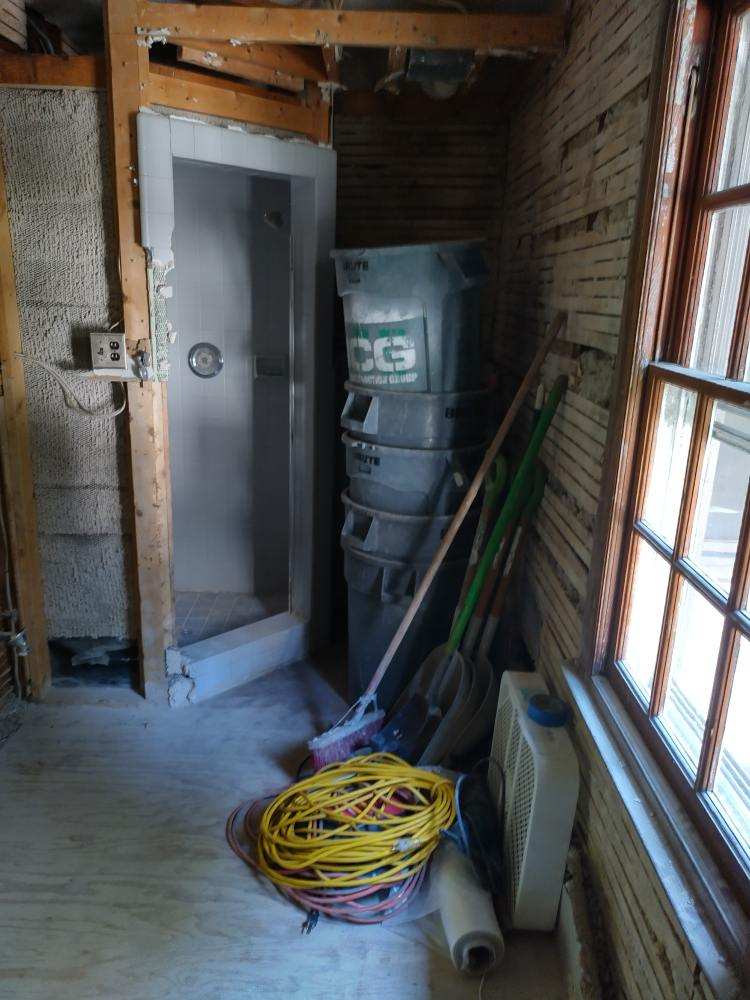
We've seen too many "demo guys" rush through jobs, leaving homeowners with unintended damage that costs thousands to fix.
Cracked floors. Dented cabinets. Dust in every room of the house. Broken plumbing lines that weren't supposed to be touched.
That's not how we work.
Selective demolition done right prioritizes three things:
- Structural integrity – Your house has to stay standing and safe throughout the process
- Protecting adjacent spaces – The rooms you're keeping should look untouched
- Dust and debris control – Your home should be livable, not a construction zone
This is why selective hand demolition requires trained crews who understand building systems, not just day laborers with crowbars.
Step 1: Planning and Site Assessment
Before a single wall comes down, professional crews assess the entire project area.
Here's what we look at:
- Load-bearing walls vs. non-load-bearing walls – You can't just remove structural supports without consequences
- Utility lines – Where are the electrical, plumbing, and HVAC systems running?
- Hazardous materials – Older homes may have asbestos, lead paint, or other concerns
- Salvageable materials – Can fixtures, cabinets, or flooring be reused or donated?
This planning phase isn't optional. It's the difference between a controlled project and a structural disaster.
Step 2: Isolation and Protection
Once the plan is set, the protection phase begins.
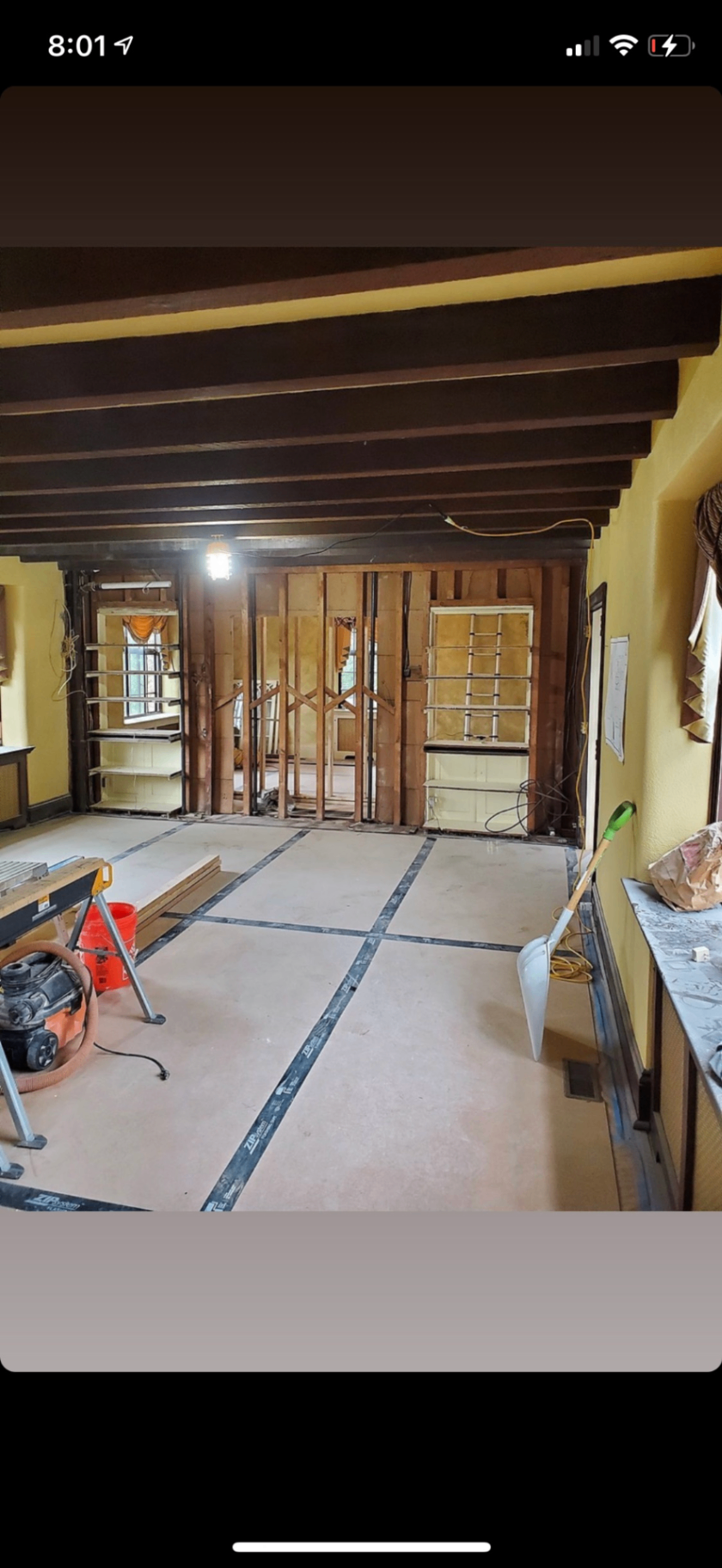
This is where your floors, walls, and adjacent rooms get wrapped, covered, and sealed off.
Floor Protection:
- Heavy-duty plastic sheeting taped down to prevent scratches, dents, and debris
- Plywood walkways over finished floors in high-traffic areas
- Ram board or Masonite for extra durability on hardwood and tile
Wall and Cabinet Protection:
- Plastic barriers to seal off adjacent rooms from dust
- Cardboard or foam padding around cabinets and fixtures you're keeping
- Temporary supports added to maintain structural stability during tearout
Dust Control – The Narcise Clean:
At NCG, we don't just clean up at the end. We control dust throughout the job with negative air machines, sealed containment areas, and daily sweeping. We call it The Narcise Clean, and it's a core part of every project we do.
Your family shouldn't have to live in a dust cloud while we work.
Step 3: Utility Disconnection
Before demolition starts, every active utility line gets disconnected and capped.
That means:
- Shutting off and capping water lines
- Disconnecting electrical circuits at the breaker
- Rerouting or protecting HVAC ducts
This isn't DIY territory. Licensed electricians and plumbers handle these disconnections to ensure everything is safe and up to code.
Skipping this step? That's how you end up with flooded rooms or electrical fires.
Step 4: Controlled Dismantling
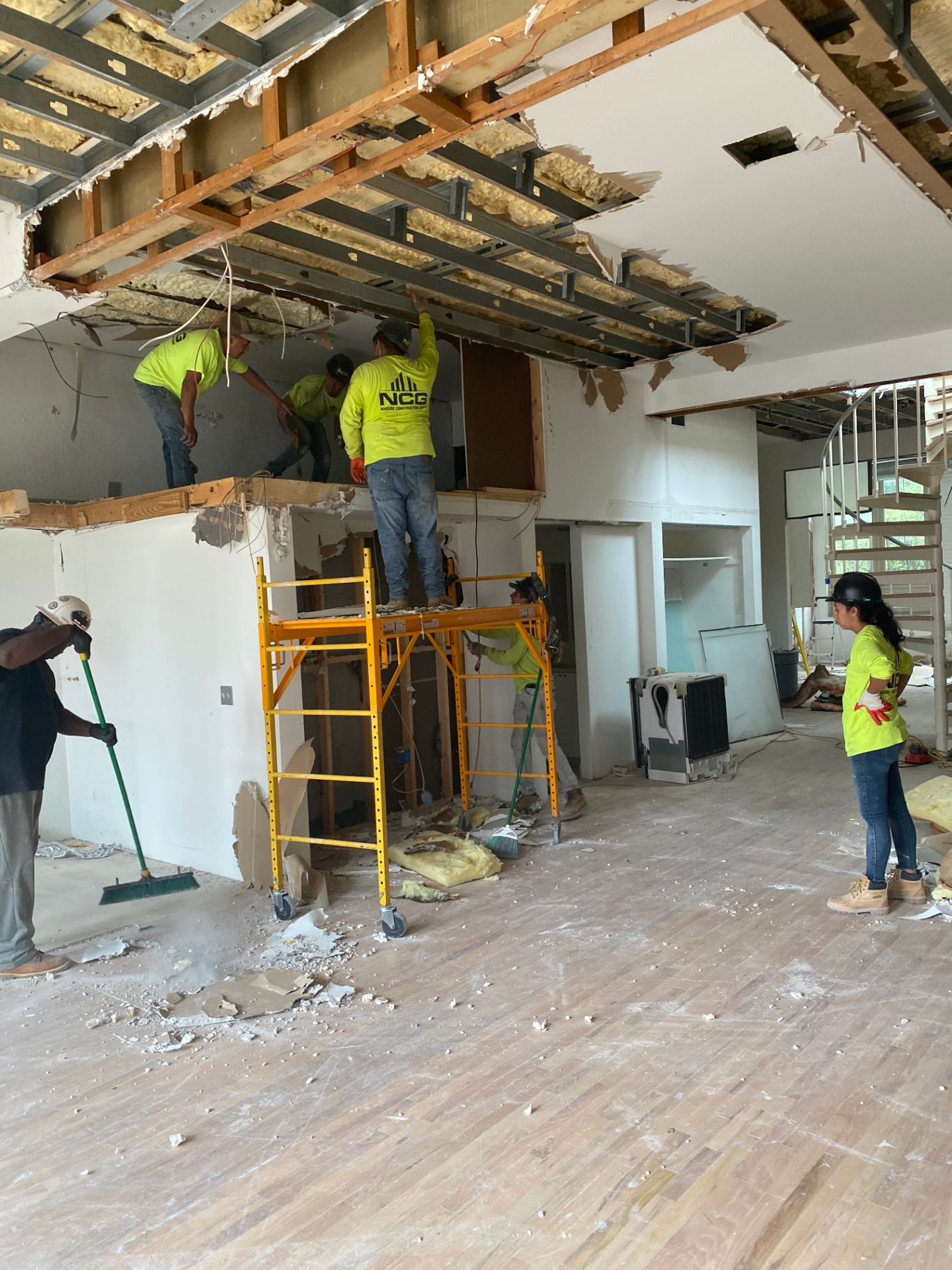
Now comes the actual demolition, but it's not what you'd expect.
There's no chaos. No sledgehammers smashing through walls randomly. Just methodical, tool-specific removal.
Hand Tools for Precision:
- Reciprocating saws for cutting through drywall and framing
- Pry bars and hammers for careful material removal
- Utility knives for scoring and separating sections cleanly
Specialized Equipment When Needed:
- Diamond blade saws for concrete cutting
- Jackhammers for tile and slab removal
- Hydraulic tools for heavy lifting and structural components
Every cut is deliberate. Every piece is removed in a way that minimizes vibration, noise, and collateral damage.
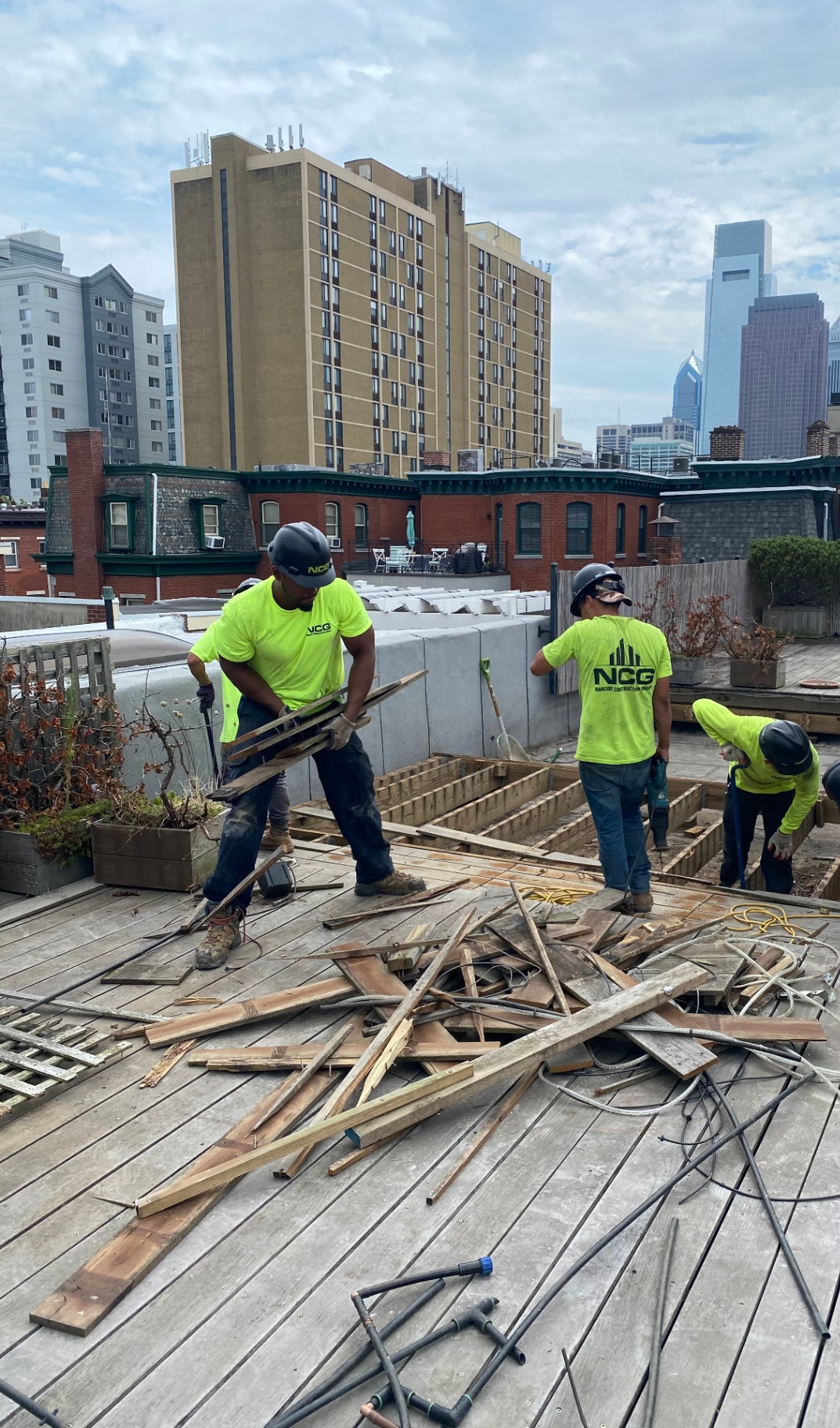
Step 5: Debris Sorting and Haul-Away
As materials come down, they're sorted immediately.
- Salvageable items – Cabinets, fixtures, flooring that can be reused or donated
- Recyclable materials – Metal, wood, drywall, and concrete get separated for recycling
- Waste – Non-recyclable debris is loaded for proper disposal
At NCG, we handle all haul and disposal as part of the job. You don't have to rent a dumpster or figure out where to take construction waste.
We remove it. We dispose of it properly. And your site stays clean throughout the project.
What Homeowners Should Expect During Selective Demo
If you're living in your home during a selective demolition project, here's what you need to know:
Noise: Yes, there will be some noise. But it's controlled and limited to work hours. We're not running jackhammers at 6 AM.
Dust: Even with the best containment systems, some dust will escape. But with The Narcise Clean approach, it's minimal: not the thick coating you'd get with a careless crew.
Access: Depending on the project, certain areas of your home may be off-limits during active demo. We'll walk you through the plan upfront so there are no surprises.
Timeline: Selective demo takes longer than smash-and-grab tearouts. That's intentional. We're protecting your home, not just racing to finish.
Why Selective Demo Isn't a DIY Job
We get it: demolition looks satisfying. Breaking stuff is fun.
But here's the reality: selective demolition requires skill, tools, and insurance that most homeowners don't have.
One wrong cut into a load-bearing wall, and you're looking at structural repairs in the thousands. Hit a live electrical wire, and you're risking serious injury. Crack a sewer line you didn't see, and suddenly you've got a plumbing nightmare.
Professional crews know how to read blueprints, identify hazards, and protect your home throughout the process. We're fully licensed and insured: so if something does go wrong (rare, but it happens), you're covered.
Ready to Start Your Project?
If you're planning a renovation in Chester County or Delaware County and need selective demolition done right, we'd love to help.
Narcise Construction Group specializes in residential services that put homeowners first: clean work, protected spaces, and honest pricing.
📞 Call or text us photos of your project for fast pricing.
📩 Reach out through our website for a free consultation.
Let's get your project started: safely, cleanly, and with your home protected every step of the way.